
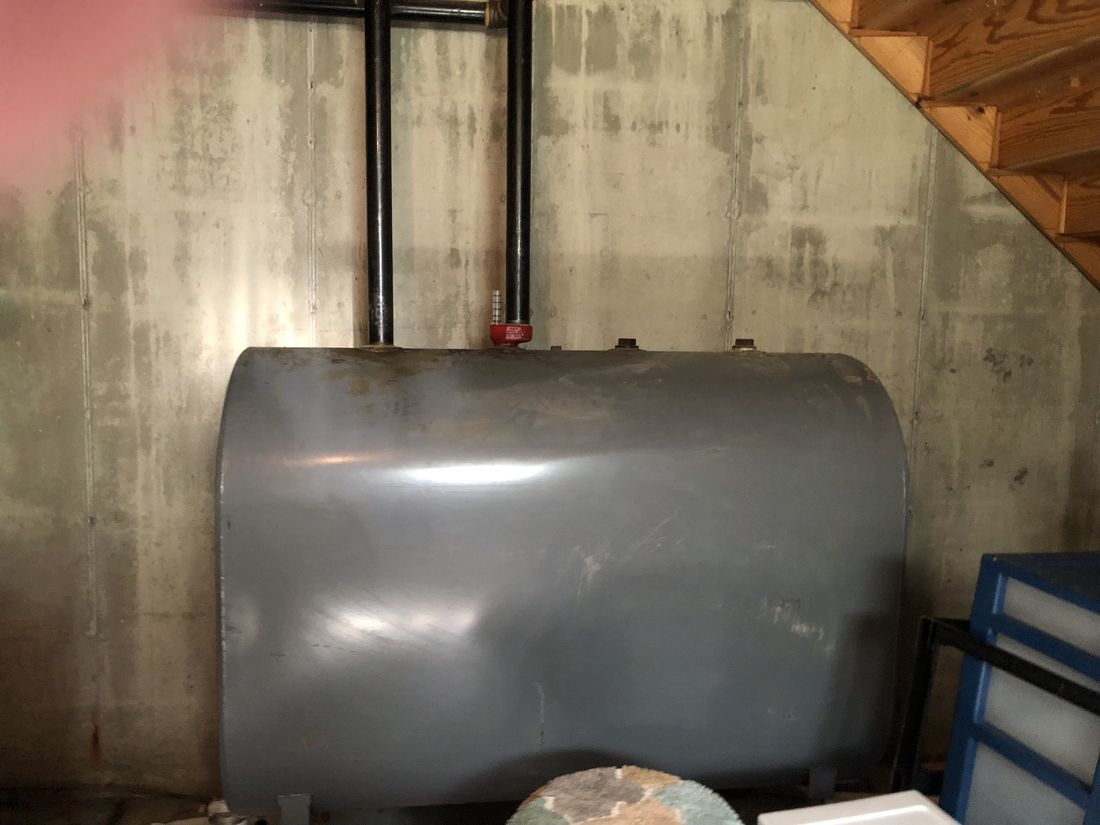
Here's the short version: a buried oil tank won't stop you from selling your Hudson Valley home, but it can absolutely stall a traditional sale — and if it ever leaked, it can turn a clean closing into a five-figure cleanup. The reason isn't the tank itself. It's a quirk of New York law that makes whoever owns the property responsible for the spill, even if they never knew the tank was there. Once a buyer's lender learns that, the deal usually grinds to a halt until somebody deals with the steel drum in the yard.
We buy a lot of older homes across Westchester, Rockland, and Putnam, and the buried-tank conversation comes up constantly. So let's walk through what you're actually dealing with, what it costs, and the four ways out — including the one most people don't realize exists.
A buried home-heating oil tank under ~1,100 gallons usually isn't regulated by New York State — but under the state's Navigation Law, the current property owner is held strictly liable for any spill, fault or knowledge aside. That's why banks and insurers want it tested, removed, or formally closed with a "spill closure" letter before a financed buyer will close. Your options: test it, remove it, abandon it in place, or sell as-is to a buyer who takes the tank as part of the deal.
Why so many Hudson Valley homes still have a tank in the yard
Drive through any older neighborhood in Yonkers, Mount Vernon, Peekskill, Nyack, or the river towns and you're looking at housing stock that was largely built before 1970 — back when oil heat was the default and the cheapest place to put the tank was underground. A 275- or 550-gallon steel tank got dropped in a hole in the side yard, the fill and vent pipes were run up near the foundation, and that was that.
Then two things happened. Families converted to natural gas or a new aboveground tank in the basement, and the old underground tank got... left. Not removed. Just disconnected, sometimes drained, sometimes not, and forgotten. There are an estimated 3 million residential heating-oil tanks across New York State, and a meaningful share of the ones in our older Hudson Valley towns are exactly this: abandoned, undocumented, and slowly rusting. Here's the problem with that — those 275-gallon steel tanks were never designed to be buried. Sitting in wet New York soil, they corrode from the outside in and eventually leak, whether there's oil in them or not.
Why a buried tank scares buyers and their banks
This is the part that catches sellers off guard. New York is a "caveat emptor" — buyer beware — state, so you might assume an old tank is the buyer's problem to investigate. Legally, the disclosure burden is light. But the liability burden is the opposite of light.
Under New York's Navigation Law (the state Oil Spill Act), liability for cleaning up a petroleum discharge is strict — it attaches to the property owner regardless of fault and regardless of whether they knew a tank existed. New York's courts have enforced this against owners who had no idea there were tanks on their land when they bought it. So when a buyer takes title to your home, they also take title to any contamination under it. The day the deed transfers, that buried tank becomes their environmental liability.
Now put yourself in the shoes of the buyer's mortgage lender. The bank is about to lend $600,000 against a house with an unknown environmental exposure sitting in the yard. They don't want that risk on their collateral. So the bank — or the buyer's attorney — will typically require one of three things before closing: a tightness test proving the tank isn't leaking, removal of the tank, or proof it was properly closed with a spill closure letter. Until that happens, the financed deal stalls. That's the real reason a buried tank is a sale-killer: not the steel, the lender.
The Westchester wrinkle: you may be in a "delegated county"
Here's a local detail most statewide guides miss, and it matters a lot if your home is in Westchester. Most home heating-oil tanks under 1,100 gallons aren't regulated by New York's Petroleum Bulk Storage program. But three counties are "delegated" — meaning the county itself can regulate even small residential heating-oil tanks: Nassau, Suffolk, and Westchester. (Rockland and Putnam are not delegated, so the statewide rules apply there.)
What that means in practice: if your home is in Westchester, the county Department of Health may have its own requirements for testing, removal, or closure of that tank — and individual towns layer on their own procedures. The Town of Pound Ridge, for example, has a documented process where the building inspector inspects the site and the Health Department must be notified of any spill. So before you do anything, a quick call to the Westchester County Health Department (or your town building department) tells you which rules actually apply to your address. Don't assume the "it's unregulated" rule of thumb covers you here — in Westchester, it often doesn't.
How to tell if your home even has one
Plenty of sellers genuinely don't know. The house has run on gas for 20 years; nobody mentioned a tank. Look for the tells:
- Capped or cut pipes near the foundation. A fill pipe (a round cap, often 2 inches across) and a thinner vent pipe poking out of the ground or the side of the house are the classic signature, even after the lines were cut.
- A patch of yard that settles or stays greener/browner than the rest — sometimes a sign of a buried tank below.
- Copper or black-iron lines running into the basement and ending at a capped stub where the old furnace used to be.
- Old documents — a prior oil-delivery sticker on the basement wall, a deed or survey note, or a previous owner's disclosure.
If you suspect one and can't confirm it, a tank-detection company can sweep the yard with a metal detector and ground probe for a few hundred dollars. Honestly, if the house dates to before 1970 and you have any of the signs above, assume it's there until proven otherwise.
Your four real options
Once you know there's a tank, you've got four paths. The right one depends on your timeline, your cash on hand, and your appetite for dealing with contractors.
1. Test it
A tightness or soil test tells you whether the tank has leaked. It's the cheapest first step, and a clean result plus documentation can satisfy some buyers and lenders. The catch, straight from the state's own homeowner guidance: no test predicts what happens next month. If the tank is an old, unprotected steel one, a clean test today doesn't mean it stays clean — and you'll often end up digging it up anyway.
2. Remove it
The cleanest fix for a sale. A licensed contractor excavates the tank, pumps and cleans it, pulls it out, and — critically — takes soil samples to confirm there's no contamination. You get documentation you can hand a buyer. If the soil's clean, you're done and the deal proceeds normally.
3. Abandon it in place
When a tank can't be dug out (it's under a slab, a porch, or too close to the foundation), it can be "abandoned in place": pumped, cleaned, filled with an inert material like sand or foam, and documented. Soil samples are still taken through drilled holes. It's legitimate and accepted — but it must be done properly and papered correctly, or you've just created a future problem with your name on it.
4. Sell as-is and let the buyer handle it
The option most homeowners don't know they have. A cash buyer who works with older homes will take the property with the tank, price the resolution into the offer, and deal with the removal or closure themselves after closing. No financed lender to satisfy, no contractor coordination on your end, no waiting. We'll come back to this one.
What it actually costs
Real numbers, because vague ranges help nobody:
| Scenario | Typical cost | Notes |
|---|---|---|
| Tank detection sweep | $200–$500 | Confirms presence/location |
| Tightness / soil test | $300–$800 | Tells you if it leaked |
| Tank removal (no contamination) | $1,000–$5,000 | Varies by size, depth, and access |
| Abandonment in place | $1,500–$4,000 | When removal isn't possible |
| Leak cleanup / soil remediation | $20,000+ | Can run far higher if it reached groundwater or a well |
Removal of a clean tank is the kind of bill most sellers can absorb. The number that changes lives is the last row. The Town of Pound Ridge's own guidance flatly states cleanup "can cost $20,000 or more," and once oil reaches groundwater, a nearby well, or a wetland, costs climb fast. That gap — a $3,000 removal versus a $20,000-plus cleanup — is exactly the uncertainty a financed buyer's lender refuses to sit on, and it's why these deals fall apart in attorney review.
If the tank already leaked
If a test comes back dirty, or you find stained soil, a strong oil smell, or a sheen on water, don't panic and don't ignore it. New York law requires that a petroleum discharge be reported to the NYSDEC Spills Hotline at 1-800-457-7362, and the contractor doing the work has a reporting duty too. The goal you're working toward is a documented closure — proof that the tank was properly dealt with and any contamination addressed. That spill-closure paperwork is the thing that lets a future buyer (and their bank) move forward.
One honest caution: hiring a "tank company" and assuming they'll handle every regulatory loose end has burned a lot of owners. New York has pursued owners for failing to properly close out a spill even after the tank work was done. If you go the remediation route, use a contractor who does the full environmental piece — assessment, reporting, and closure — not just the digging.
Selling as-is — without ever touching the tank
If your timeline, your budget, or your patience can't absorb contractors, county health departments, and a financed buyer's nervous lender, selling as-is for cash is the path that sidesteps the whole chain. Here's why it works specifically for the tank problem:
- No lender to satisfy. A cash purchase has no mortgage underwriter demanding a tightness test or closure letter before funding. The single biggest source of delay disappears.
- The buyer prices it in and owns the outcome. An experienced local buyer estimates the removal or remediation, factors it into the offer, and handles it after closing. You're not fronting $3,000 — or gambling on whether it's $3,000 or $30,000.
- You still disclose what you know. As-is doesn't mean hiding anything. You tell the buyer there's a tank; they account for it. (More on New York's disclosure rules in our companion guide below.)
Is the cash offer lower than a fully-renovated, tank-free comp? Yes — it has to be, because the buyer is absorbing the risk you'd otherwise carry. But run the real comparison: a traditional sale here often means paying for the removal yourself, surviving inspection and lender review, and hoping no test comes back dirty. After all that, the net gap is usually smaller than people expect — and the cash route trades a pile of uncertainty for a known number and a firm closing date.
Got an old tank in the yard and a house to sell?
We buy Hudson Valley homes with buried oil tanks all the time — as-is, no removal required on your end. We'll explain exactly how we price it.