
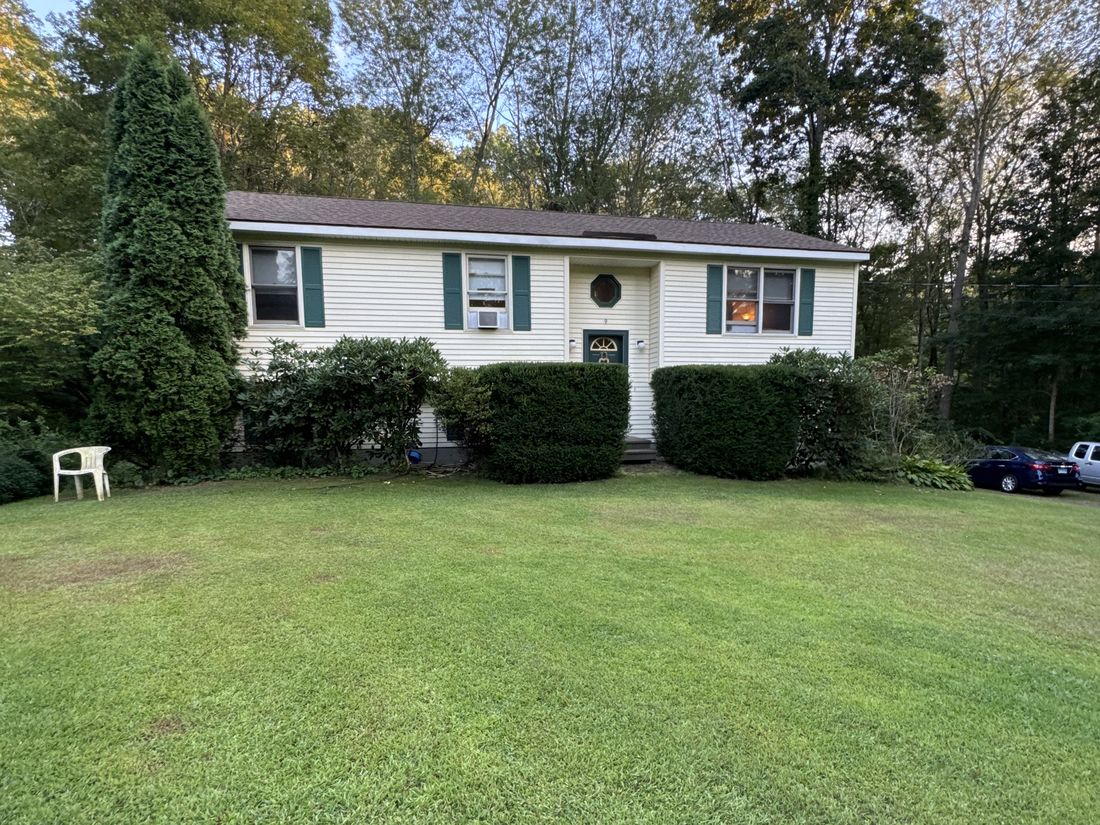
If you sold a home in New York before 2024, your attorney probably told you to skip the disclosure form and just hand the buyer a $500 credit at closing. That option is gone. As of March 20, 2024, New York sellers must actually complete and deliver the Property Condition Disclosure Statement (PCDS) before the buyer signs the contract — and the form now includes a set of new flood questions. For Hudson Valley sellers, where flooding and aging housing stock are real factors, this is worth understanding before you list.
A 2023 law (S5400 / A.1967, effective March 20, 2024) eliminated the old $500 credit that let sellers skip the disclosure form. Now most sellers of 1–4 family homes must complete and deliver a PCDS before the buyer signs a binding contract, and the updated form adds questions about FEMA flood zones, flood history, and flood insurance. The form is based on your actual knowledge — you don't have to go investigate — and it doesn't apply to co-ops, condos, or several other exempt transfers.
General information, not legal advice. For your specific sale, talk to a New York real estate attorney.
What actually changed in 2024
New York's Property Condition Disclosure Act has been on the books since 2002. The catch was a loophole: a seller who didn't want to fill out the disclosure could simply give the buyer a $500 credit at closing instead. Downstate — including here in the Hudson Valley and New York City — that credit became the default. Most attorneys advised it, because the form's questions were seen as vague traps, and $500 was a rounding error on a half-million-dollar sale. In practice, almost nobody filled out the form.
The legislature decided a $500 penalty was too small to protect buyers, so Governor Hochul signed legislation (S5400) on September 22, 2023, that deleted the $500 credit entirely, effective March 20, 2024. The practical effect: if you're selling a one-to-four-family home and a binding contract is signed on or after that date, you're expected to complete and deliver the PCDS to the buyer before they sign. The official, updated form lives on the New York Department of State website.
The new flood questions
The biggest substantive change is a block of flood-related questions added to the form. This was the legislature's main motivation — protecting buyers in an era of heavier storms (the remnants of Hurricane Ida in 2021 did real damage across parts of the Hudson Valley). The updated PCDS now asks sellers to disclose things like:
- Whether any or all of the property sits in a FEMA-designated floodplain.
- Whether it's in a special flood hazard area (the 100-year floodplain) or a moderate hazard area (the 500-year floodplain).
- Whether the property is subject to a flood-insurance requirement, and whether it currently carries flood insurance.
- Whether you or prior owners ever received flood-damage assistance from FEMA, the SBA, or another federal program.
- Whether there's a FEMA elevation certificate for the property.
If your home has flooded, or sits in a mapped flood zone, this is now squarely on the disclosure form. (Worth noting: the state realtors' association argued FEMA's maps are themselves outdated in places — so a "no" based on an old map isn't a guarantee, and buyers should still do their own checking.)
What "actual knowledge" means for you
Here's the part that calms most sellers down. The PCDS is answered based on your actual knowledge. The law does not impose a duty to investigate, inspect, or go dig through public records to answer the questions. If you genuinely don't know whether something applies, "Unknown" is a legitimate answer for many items. You're not being asked to become a home inspector on your own house — you're being asked to honestly report what you already know.
What you cannot do is knowingly give a false or incomplete answer. The form itself warns that a knowingly false statement can subject you to claims by the buyer before or after closing. So the standard is straightforward: tell the truth about what you know, and use "Unknown" honestly where you don't.
When the disclosure doesn't apply
The requirement isn't universal. A couple of important carve-outs:
- Co-ops and condos (and properties in HOAs that aren't held in fee simple) are not covered. Given how many co-ops and condos there are in Westchester, this exempts a real slice of local sales.
- New York's Real Property Law lists 14 exemptions overall — largely tied to the way the property transfers. Court-ordered sales, transfers by an estate's executor or administrator, certain transfers between co-owners or family, and similar situations can fall outside the requirement.
If you're selling an inherited home through an estate, or in any non-standard transfer, ask your attorney whether you're exempt — you may be.
Does this raise your liability?
Less than people fear. New York is still fundamentally a caveat emptor — buyer-beware — state. A seller generally has no duty to volunteer information beyond active concealment, affirmative misrepresentation, or partial disclosure, and the buyer still has a duty to inspect. Filling out the PCDS doesn't create new warranties, and the form explicitly says it isn't a substitute for the buyer's own inspection.
Two things haven't changed and are worth repeating: an "as-is" clause and a merger clause will not protect a seller from a fraud claim. They never did. If you knowingly conceal a material defect — a tank you know leaked, a basement you know floods — neither "as-is" nor a slick contract clause saves you. The disclosure law just makes the honest path the required one. For an honest seller, that's not a new risk; it's a form.
What it means for as-is and cash sales
Selling as-is to a cash buyer doesn't exempt you from the disclosure — but it pairs naturally with it. An as-is cash sale is built on the buyer knowing what they're getting and pricing accordingly, so full, honest disclosure is exactly what makes the deal solid. You tell us about the oil tank, the flood history, the roof that's on its last year; we factor it into the offer; nobody is surprised at the closing table.
That's actually the cleanest version of a sale under the new rules: a buyer who isn't relying on a lender's appraisal or a re-trade after inspection, and a seller who disclosed honestly and isn't carrying hidden exposure forward. If your home has the kinds of conditions that make the PCDS feel daunting — flooding, an old tank, deferred maintenance — an as-is buyer is often the least stressful way to sell with the disclosure handled cleanly.
A seller's quick checklist
- Pull the current PCDS form from the NY Department of State and read it before you list.
- Answer from actual knowledge — truthfully, with "Unknown" where you really don't know.
- Know your flood status: check your FEMA flood-zone designation and gather any flood-insurance or elevation paperwork.
- Ask your attorney whether your sale is exempt (co-op/condo, estate, court-ordered, etc.).
- Never conceal a known material defect — "as-is" doesn't cover fraud.
Worried the disclosure form will scare buyers off?
If your home has flooding, an old tank, or condition issues you'd rather just disclose and move past, we'll make an as-is cash offer that accounts for all of it — no re-trades, no surprises.