
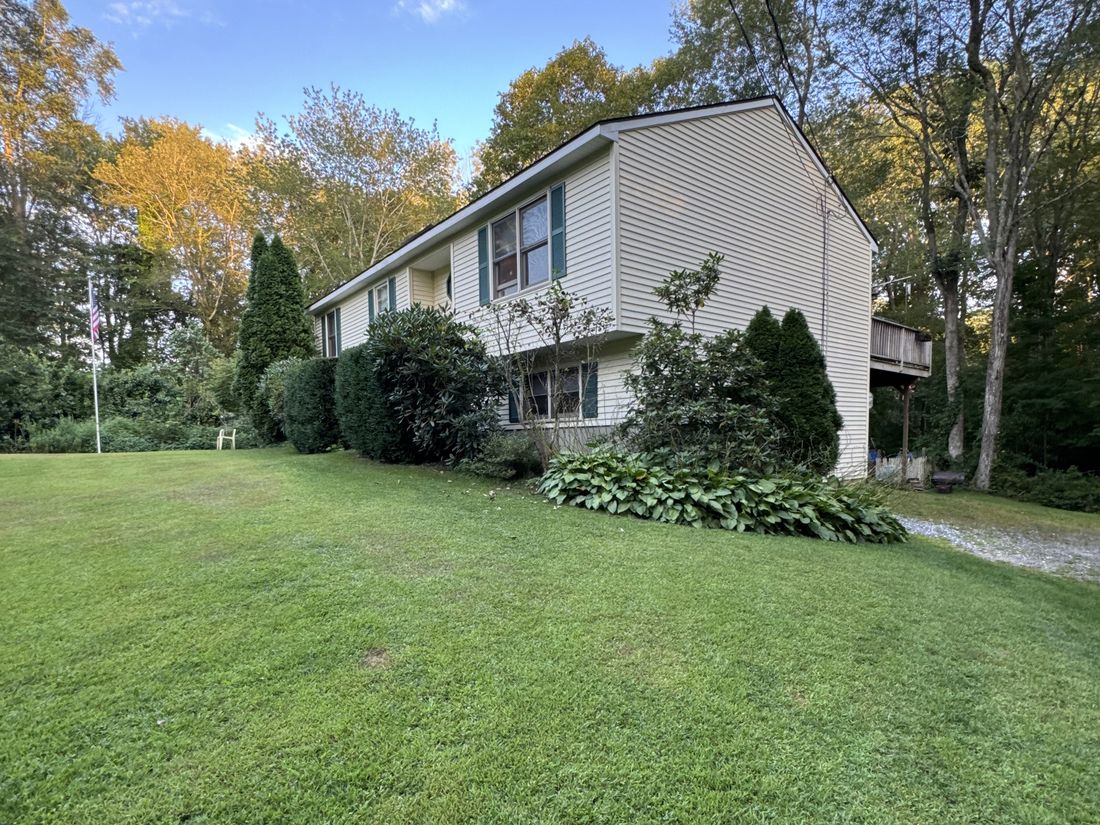
No law in New York says you can't sell a house with a failed septic system or a well that tested positive for bacteria. What usually happens, though, is that the buyer's inspector finds it, the buyer's bank refuses to lend until it's fixed, and you're suddenly looking at a replacement bill in the tens of thousands. The problem isn't really the leach field or the well. It's that a mortgage lender won't put money into a house that can't safely handle its own sewage or supply clean water, and the sale sits frozen until someone pays to fix it.
Much of what we buy is in Putnam and northern Westchester, where nearly every house has its own septic system and well, so we have this conversation often. Below we cover how to tell what's wrong, why the watershed matters, what repairs typically run, and the four ways sellers usually handle it, one of which doesn't involve fixing anything.
A failed septic system or a failed well test mostly kills financed sales — FHA and VA loans in particular require a working septic and safe drinking water before closing. A conventional septic replacement often lands in the low five figures, and an engineered system for tough soil can run $15,000–$30,000 or more. Your options: repair it, replace it, sell traditionally after fixing it, or sell as-is to a cash buyer who prices the fix in and handles it after closing.
Why so many Hudson Valley homes run on septic and a private well
Drive fifteen minutes north or east of the river cities and the housing stock changes. Yonkers, Mount Vernon, and New Rochelle are on municipal sewer and water — but much of Putnam County (Carmel, Mahopac, Brewster, Patterson, Kent, Putnam Valley) and the more rural corners of northern Westchester and Rockland were built on private septic systems and private wells. There was never a public main to tie into, so each home treats its own wastewater in a tank-and-leach-field system in the yard and pulls its drinking water from a drilled well.
That setup works fine for decades — until it doesn't. A conventional septic system has a realistic service life of roughly 20 to 40 years, and a lot of Hudson Valley systems are now well past that. Leach fields clog, tanks crack, and the ground that once absorbed effluent stops percolating. When a system reaches the end of its life at the same moment you're trying to sell, you've got a timing problem that a financed buyer's lender will not ignore.
Why a failed septic or well scares buyers and their banks
Many sellers expect a worn-out septic system to be a bargaining point, the way an old water heater might be. But to a buyer's lender, a non-functioning septic or a contaminated well isn't a haggling point — it's a health-and-safety defect that makes the house ineligible for the loan.
Think about it from the lender's side. It's being asked to make a large loan secured by a house that, according to the inspection, can't properly dispose of wastewater or provide water that's safe to drink. FHA and VA loans are the strictest — they require the septic to be functional and the well water to pass a potability test (total coliform bacteria absent, nitrates and lead within limits) before the loan can close, and the sample generally has to be pulled by a neutral third party, not the seller. Conventional lenders often follow suit once an inspection flags the problem. So the loan waits until the system is fixed and the water is tested again. In other words, what really stops these sales is the lender's rulebook, not the leach field.
There's a disclosure dimension, too. New York's updated 2024 Property Condition Disclosure law now requires sellers to answer questions about the septic system and the drinking-water supply based on their actual knowledge — and selling "as-is" doesn't let you conceal a defect you know about. If you know the system backs up or the water tested dirty, the safe move is to disclose it.
The watershed wrinkle: Putnam and northern Westchester
Generic septic advice written for the rest of the state often skips this, and in our area it can change the whole project. A large share of Putnam County and northern Westchester sits inside the New York City watershed — the East-of-Hudson lands that drain into the reservoirs supplying New York City's drinking water. Septic systems there (formally "subsurface sewage treatment systems," or SSTS) fall under NYC Department of Environmental Protection watershed rules, which the Putnam County Department of Health and Westchester County review locally under a delegation agreement with DEP.
What that means in practice: repairing, replacing, or expanding a septic system in the watershed can trigger county review, engineered design standards, and setbacks from wells, wetlands, and reservoirs that a system in an unregulated area wouldn't face. It can add time and cost to a fix. Requirements vary by town and by which waterbody you're near, so before you spend a dollar, a quick call to the Putnam County (or Westchester County) Health Department for your specific address tells you which rules actually apply. In the watershed, "just put in a new tank" is rarely the whole story.
Signs your septic system may be failing
Plenty of sellers suspect a problem but aren't sure. The classic warning signs:
- Slow drains and gurgling throughout the house, or sewage backing up into the lowest fixtures.
- Soggy ground, standing water, or a sewage odor over the leach field — often the grass there is unusually lush and green.
- The tank needing to be pumped far more often than the usual every three to five years.
- No records — you inherited the house or bought it long ago and have no idea where the tank is or when it was last serviced.
A licensed inspector can pump and open the tank, run dye tests, and evaluate the leach field to tell you whether you're looking at a minor repair or a full replacement. That distinction — a $1,500 pump-and-baffle fix versus a $25,000 new engineered system — is exactly what a buyer's lender will want pinned down before they'll fund.
The well test that can stall your closing
If your home is on a private well, the drinking water gets its own scrutiny. A standard real-estate water test looks for total coliform bacteria, nitrates, nitrites, and lead, and for FHA and VA loans the water has to come back safe — coliform absent — for the loan to close. Older Hudson Valley wells fail for ordinary reasons: bacteria from a cracked well cap, elevated nitrates from a nearby septic field or old agriculture, or naturally occurring minerals in the local bedrock.
Some failures are cheap to fix — a shock chlorination and a new cap. Others need a UV or filtration treatment system, or in the worst case a new well, which is a serious expense. Either way it's time you may not have, and it's one more contingency a financed buyer can walk away over. A cash sale removes the lender's water requirement from the equation entirely.
Your four real options
When you know the system or the water won't pass, sellers generally go one of four ways. Which makes sense comes down to how soon you need to sell, how much money you can put in up front, and how much patience you have for engineers and the health department.
1. Repair it
If an inspection shows the trouble is localized — a failed baffle, a clogged distribution box, a bad pump, a cracked well cap — a targeted repair may be enough to satisfy a buyer and their lender. It's the cheapest path when it's available, but on an older system a patch sometimes just buys a little time before the leach field goes.
2. Replace it
The cleanest fix for a traditional sale. A licensed contractor designs and installs a new system — and in the watershed that means an engineered design, percolation testing, county review, and permits before anyone breaks ground. You end up with documentation a buyer's lender will accept, but it's the most expensive and slowest route.
3. Sell traditionally after fixing it
Pay for the repair or replacement up front, then list on the open market. You'll likely net a higher sticker price — but you're fronting the cost, absorbing the delay, and betting the re-test comes back clean. For a seller who's already stretched, that's a lot of risk to carry.
4. Sell as-is and let the buyer handle it
Many owners don't realize this is possible. A cash buyer can purchase the house with the failed system or the bad well, subtract the expected cost from the price, and take care of the design, permits and installation after the deed changes hands. You don't hire anyone or file anything. More on this below.
What it actually costs
The ranges below are what we typically see quoted in the Lower Hudson Valley. Rocky or wet lots and watershed review tend to push a job toward the top of the range:
| Scenario | Typical cost | Notes |
|---|---|---|
| Septic inspection | $300–$700 | Pump, open, dye test, leach-field check |
| Real-estate well water test | $150–$400 | Coliform, nitrates, nitrites, lead |
| Minor septic repair | $1,500–$5,000 | Baffle, D-box, pump, line |
| Well fix (shock / UV / filtration) | $500–$6,000 | New well runs far more |
| Engineered septic replacement | $15,000–$30,000+ | Higher in the NYC watershed |
Most sellers can manage an inspection or a small repair. It's the engineered replacement in the last row that derails plans, both because of the cost and because design, county approval and installation can take weeks in the watershed. Until everyone knows whether the bill is closer to $5,000 or $30,000, the buyer's lender won't commit, and that uncertainty is where many contracts get cancelled.
If your failing system is near a designated priority waterbody, you may qualify for New York's Septic System Replacement Fund, which reimburses eligible homeowners for up to 50% of replacement costs (capped at $10,000), or up to 75% (capped at $25,000) for an enhanced treatment system. Eligibility is county- and waterbody-specific — check with your county Health Department to see whether your address qualifies before you assume you're on the hook for the whole bill.
Selling as-is — without ever fixing the system
If you don't have the money, the time or the stomach for perc tests, engineers and county approvals, selling the house as it is for cash avoids all of it. These are the reasons it fits a septic or well problem so well:
- No bank conditions. Without a mortgage, nobody requires a passing dye test or a clean coliform result before closing, so the main source of delay is gone.
- The cost risk moves to the buyer. We estimate the repair or replacement, build it into our price and handle the health department and the contractor after we own the house. Whether the job ends up at $5,000 or $30,000 is our concern, not yours.
- Disclosure still applies. Selling as-is isn't a way around the truth. Tell us what you know about the system and the water, and we'll factor it in.
This is bread-and-butter work for us. The pattern is almost always the same: a buyer's inspection flags a failed septic, the financed sale collapses at the eleventh hour, and the seller is left choosing between sinking $20,000-plus into a new system and starting over, or selling as-is to a buyer who prices the system into the offer up front. We see that story across Carmel, Mahopac and the rest of Putnam County. If it is your story right now, we buy houses in Putnam County with the septic and the well exactly as they are.
Will a cash price be lower than what an updated house with a working system would sell for? Yes, since we're taking on the repair and the risk. The honest comparison, though, is against what you'd net after paying for a new system, waiting through county approval, and hoping the buyer's lender is satisfied with the retest. Measured that way, the difference often shrinks, and you get a set number and a closing date you can count on. If you've still got questions, our frequently asked questions page walks through how the offer and the timeline work.
Septic or well problems holding up your sale?
Tell us what the inspection found. We'll make a cash offer on the house as it is, walk you through how the repair estimate affects the number, and handle the county work ourselves after closing.