
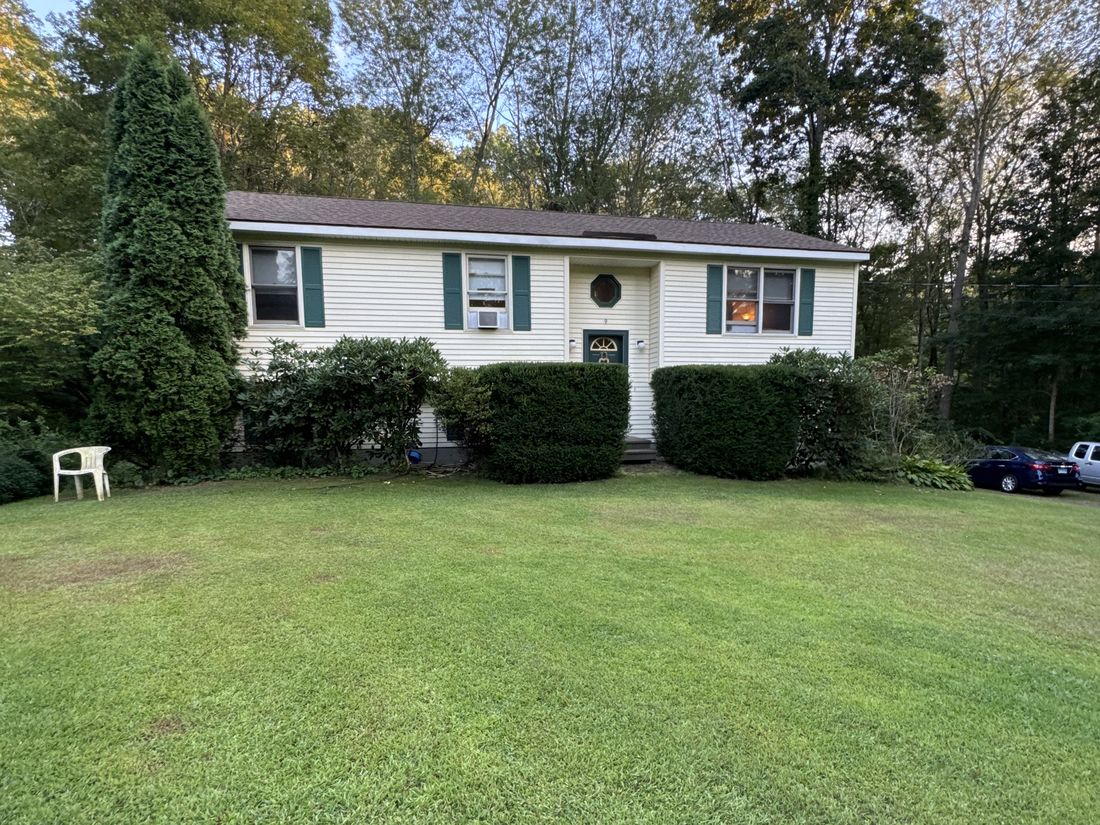
Here's the short version: the house you live in and the house on file at your town's building department are not always the same house. A deck that went up in 2003 under a permit nobody ever closed out. A basement finished into a family room and a bathroom with no permit at all. A second kitchen a previous owner put in for an aging parent. None of that stops you from owning the house or living in it. All of it can stop a closing.
We buy homes across Westchester, Rockland and Putnam, and this is one of the most common ways a Hudson Valley sale quietly falls apart six weeks in — not because anything is wrong with the house, but because the paperwork behind it doesn't match what's standing there. It hits long-tenure owners hardest: the people who have been in the same house for thirty or forty years and did the work themselves, or bought from someone who did.
New York's state code requires a certificate of occupancy or a certificate of compliance for any work that was the subject of a building permit, and for any building converted from one use or occupancy classification to another. So a municipal file that doesn't match the house is a genuine closing problem, not a technicality — the buyer's attorney will find it, the title company may decline to insure it, and the lender won't fund without it. You have four paths: close the open permit out, legalize the work after the fact, undo it, or sell as-is to a cash buyer who takes the file exactly as it stands.
Three different problems people lump together
"Permit problems" gets used as a single phrase, but there are really three separate situations here, and they don't cost the same thing to fix.
- An open (or expired) permit. Somebody pulled a permit, the work got done, and the final inspection never happened. The permit just sits open in the file — sometimes for decades. The work may be perfectly good; nobody ever signed off on it.
- Unpermitted work. No permit was ever pulled. The town has no record the work exists, which means it also has no record that it meets code.
- No certificate of occupancy on file. Either the certificate was never issued after permitted work, or the house predates the point at which the municipality required one at all.
That last distinction matters and it calms a lot of sellers down. Plenty of older Hudson Valley homes — the pre-war housing stock in Yonkers, Mount Vernon, Ossining and Peekskill especially — never had a certificate of occupancy because none was required when they were built. That is not a violation. Most building departments will issue a letter confirming that no certificate was required as of the date of construction, and a buyer's attorney will generally accept it. The problem isn't the age of the house. It's the work that came later and was never certified.
What New York actually requires
This is where the state, not just your town, has an opinion. Under New York's uniform code enforcement rules — 19 NYCRR Part 1203 — every municipality has to run a code-enforcement program that issues a certificate of occupancy or a certificate of compliance for any work that was the subject of a building permit, and for any structure converted from one use or occupancy classification to another. Permission to occupy that work is granted only by issuing that certificate.
Read that second half again, because it's the sentence that catches people: converted from one use or occupancy classification to another. That's the single-family house that became a two-family. That's the garage that became a bedroom. It isn't a local quirk you can shop around by moving one town over — it's the state framework every building department in Westchester, Rockland and Putnam is administering.
What varies locally is zoning and process: what your village allows, what a variance takes, what the fee schedule looks like, and how backed up the department is. Some municipalities charge a higher fee for a permit applied for after the work was already done — your building department's published fee schedule will tell you whether yours does.
Who finds it, and when
Almost never the buyer. Almost always the professionals behind the buyer, and usually late enough to hurt.
New York is an attorney-state closing, so a buyer here has a lawyer working the file from contract forward. That attorney orders the title search, and a standard New York purchase contract has the seller representing that the improvements were made in accordance with municipal requirements and that all required certificates will be delivered at closing. When the municipal search comes back showing an open permit from 2003 or no certificate for the finished basement, the attorney raises it — typically weeks into the deal, after the inspection is done and everyone has mentally moved on.
Two other parties care just as much. Title companies generally will not insure a structure that lacks a required certificate of occupancy, or will take an exception for the unpermitted portion — and a buyer's lender won't accept that exception. The lender won't fund a property whose certificate doesn't cover what's actually there. So the deal doesn't die because the buyer got cold feet. It dies because two institutions behind the buyer can't sign off, and the seller is suddenly on a clock to fix something that took ten years to become a problem.
This is the same structural pattern behind most stalled Hudson Valley sales — the buyer is fine, the buyer's lender is not. It's exactly why a failed septic or well test derails a financed deal too.
The five that come up most in this market
After enough of these you start to see the same five over and over:
- The finished basement. Family room, a bedroom, often a full bathroom. Ceiling height and egress-window requirements are what usually make these hard to legalize after the fact.
- The deck or enclosed porch. Extremely common, extremely often permitted-but-never-finaled.
- The in-ground pool. Pools bring fencing, gate-latch, and alarm requirements with them, so an unpermitted pool is rarely a paperwork-only fix.
- The converted garage or attic bedroom. This is a change of use, which pulls it squarely into the certificate requirement above.
- The second kitchen. The one that most often turns into a zoning fight rather than a building fight — more on that next.
Long-tenure owners collect these the way anyone collects things over decades. When we bought a high ranch in Yorktown Heights from owners who'd been in it forty-five years, the improvements were all real, all done, and all invisible to the town's file. That's not negligence. That's what forty-five years of living in a house looks like.
The in-law apartment problem
The second kitchen deserves its own section, because in the denser parts of this market it's less a building-code issue than a zoning one — and zoning is much harder to talk your way out of.
Across Yonkers, Mount Vernon, New Rochelle and Spring Valley, single-family houses were quietly converted into two-family layouts decades ago: a separate entrance, a second kitchen, a rented lower level. Sometimes it was for a parent. Often it became a de facto rental. Under the state rule above, changing the occupancy classification requires a certificate — and if the parcel is zoned single-family, the town's answer isn't "file some paperwork," it's that the second unit can't exist there at all.
That has consequences a seller feels directly. A lender won't underwrite rental income the municipality doesn't recognize, so the house appraises as the single-family it's legally supposed to be, not as the income property it functions as. A title company may take an exception on the unpermitted portion. And if there's a tenant in the space, you now have New York tenant law layered on top of the zoning problem — which is its own subject, and one we cover in our guide to selling a two- or three-family in Yonkers or Mount Vernon.
If you're in this situation, the honest framing is this: the value you think you're selling and the value the financing system will recognize are two different numbers, and no amount of paperwork filed during a 45-day contract period closes that gap.
How to find out what your town's file says
Do this before you list. It costs almost nothing and it's the difference between negotiating from information and getting ambushed in attorney review.
Start at the counter. Your town, village or city building department keeps a property file, and in most Westchester and Rockland municipalities you can request it directly. Ask for four specific things:
- The certificate of occupancy or certificate of compliance on record — or written confirmation that none was required at the time of construction.
- The full permit history for the parcel.
- Any permits that are still open or expired without a final inspection.
- Any open violations or orders on the property.
If the department won't produce the file informally, you have a statutory route: a request under New York's Freedom of Information Law. Municipal building records are public, and an agency has five business days to respond to or acknowledge a FOIL request. Some departments charge a modest copying fee. Either way, you end up holding the same document the buyer's attorney is going to order, several months earlier — and that's the whole point.
If the fix requires a zoning variance, understand what you're signing up for: a variance is a public hearing in front of the Zoning Board of Appeals, scheduled on the board's calendar, with notice requirements. The construction is rarely the slow part. Getting on a board agenda and back off it again is. If you're selling to a timeline — a job start date, a closing on the next house, a probate deadline — this is the item most likely to blow it.
What you have to tell a buyer
New York's Property Condition Disclosure Statement asks, in so many words, whether there are certificates of occupancy related to the property. You answer from your actual knowledge — the statute doesn't require you to go dig through public records you've never seen. But it does not let you conceal something you do know about, and the 2024 amendments removed the old $500-credit escape hatch that let sellers skip the form entirely. Our guide to New York's 2024 property disclosure law walks through what "actual knowledge" really requires of you.
Two practical points. First, "I don't know" is a legitimate answer when it's true — and for an inherited house you never lived in, it usually is. Second, selling as-is limits what you're obligated to repair; it is not a licence to hide a finished basement you know full well was never permitted. Concealment is the thing that turns a closing delay into a lawsuit after the fact.
Your four options
Once you know what the file says, the path is usually obvious.
1. Close out the open permit
If the work was permitted and built to code and the only failure was administrative, this is the cheap ending. You call the building department, schedule the final inspection, correct whatever gets flagged, and the certificate issues. Sellers who assume the worst are sometimes two phone calls from done.
2. Legalize the work after the fact
No permit was ever pulled, but the work is sound and zoning allows it. You'll typically need as-built drawings from an architect or engineer, an application, inspections that may involve opening up finished walls to show what's behind them, and sometimes a variance. Real money and real months — but it ends with a clean file and full market value.
3. Reverse the work
When the work can't be legalized — a second unit in a single-family zone, a basement bedroom that can't meet egress, a structure inside a setback — the town's remedy is restoration to the last certified condition. You pay to remove something you paid to build. It's the outcome nobody wants and it's more common than sellers expect.
4. Sell as-is
Sell the house exactly as it stands, file and all, to a buyer who doesn't need a lender's sign-off to close.
| Path | What it takes | Best when |
|---|---|---|
| Close out an open permit | Call the building department, schedule the final inspection, correct what's flagged | The work was permitted and built to code — nobody signed off |
| Legalize after the fact | As-built drawings, application, inspections, sometimes a ZBA variance | The work meets current code and zoning allows it |
| Reverse the work | Demolition and restoration to the last certified condition | Zoning, setbacks or egress make legalization impossible |
| Sell as-is for cash | Nothing on your end — the buyer takes the file as it stands | Timeline, budget or zoning rules the other three out |
Notice what the first three have in common: they all put a municipal calendar between you and your closing date. If your timeline is flexible and the work is legalizable, option one or two is genuinely your best financial outcome and we'll tell you so. If it isn't, the fourth option exists for a reason.
Selling as-is with the file still open
Here's why an as-is cash sale sidesteps this specific problem so cleanly:
- No lender to satisfy. The certificate requirement that stops a financed deal is the lender's requirement. Remove the mortgage and you remove the thing blocking the closing.
- The buyer takes on the legalization. An experienced local buyer prices the as-built drawings, the permit work, or the restoration into the offer and then goes and does it — dealing with the building department, the inspections and the board on their own timeline, not yours.
- You're not gambling on a variance. Fixing it yourself before a sale means spending money on an outcome a zoning board hasn't agreed to yet. Selling as-is converts that open-ended risk into a fixed number today.
- You still disclose. We want to know what's unpermitted — it's how we price it accurately. Telling us costs you nothing and protects you afterward.
This is ordinary work for us across Yorktown Heights, Peekskill, Ossining and the river cities. The story is almost always identical: a house that's been well cared for by people who did real improvements over decades, a municipal file that never caught up, and a financed buyer whose attorney found the gap in week six.
Is a cash offer lower than a fully-papered comparable sale? Yes — it has to be, because the buyer is absorbing the legalization cost and the zoning risk you'd otherwise carry. But compare it against the real alternative rather than a fantasy one: paying an architect for as-built drawings, waiting on a board agenda, possibly opening finished walls for inspection, and hoping the answer comes back yes before your buyer walks. Once you price that honestly, the gap narrows a lot — and you're trading an open-ended process for a known number and a firm date. If you want the mechanics of how the offer and timeline work, our frequently asked questions page covers it.
Open permits or unpermitted work — and a house to sell?
We buy Hudson Valley homes with open permits, missing certificates, and unpermitted additions all the time — as-is, with no trips to the building department on your end. We'll explain exactly how we price it.