
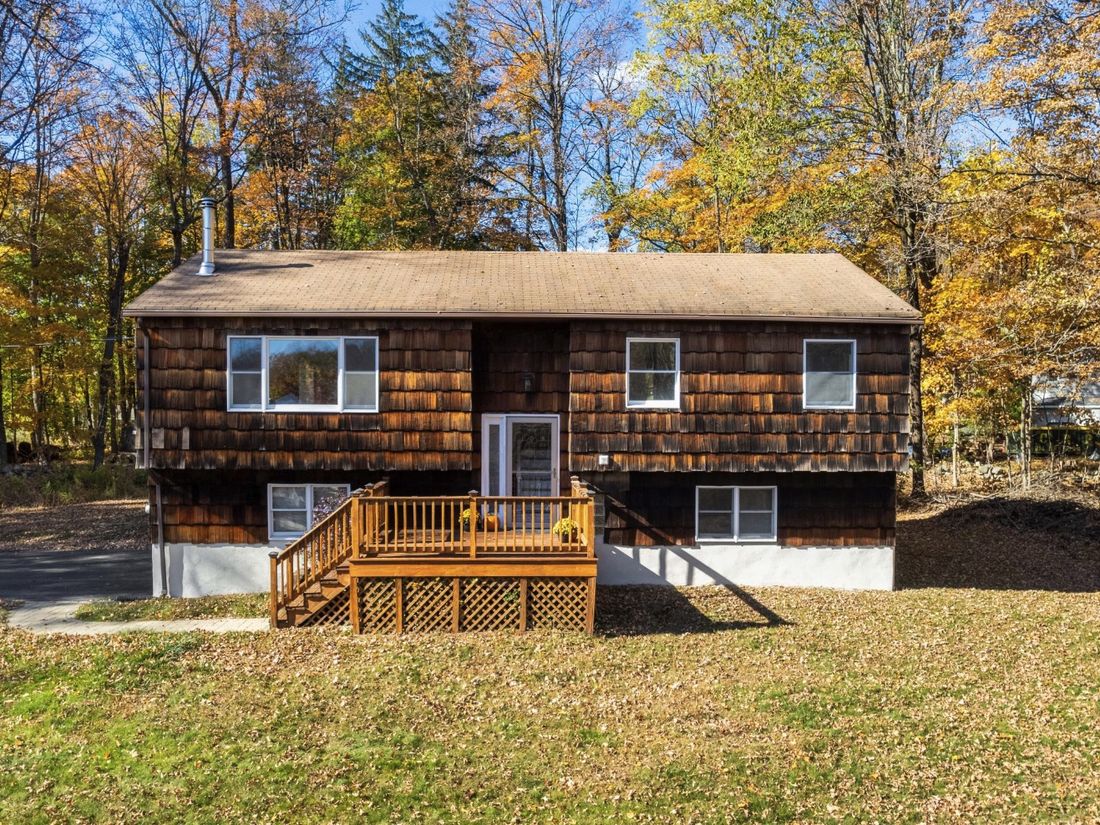
Almost everyone selling a house in this market has one number in their head — what the neighbours got, what an online estimate says, what the agent who dropped a postcard in the mailbox thinks it is worth. Far fewer people have the second number: what actually lands in their account after the closing. Across Westchester, Rockland and Putnam that gap is wider than most sellers expect, and a real part of it is specific to New York and to a handful of cities inside this county.
We buy houses throughout the Lower Hudson Valley, and sellers ask us some version of the same question every week: where does the money go? So here it is, line by line — what the state charges, what Yonkers, Mount Vernon and Peekskill charge on top of it, what your attorney does, what a listing really costs, and what changes when you sell for cash. Every figure below comes from the taxing authority itself.
New York State charges the seller a real estate transfer tax of $2 for every $500 of the price — 0.4%. Three Westchester cities add a municipal transfer tax on top: Yonkers at 1.5%, Mount Vernon at 1.5% for deeds dated on or after February 1, 2026, and Peekskill at 1%. The 1% mansion tax on sales of $1 million or more is the buyer's, not yours. If you have moved out of New York, the state collects an estimated income tax payment at closing unless the house was your principal residence. Add a listing commission and the cost of carrying the house while it sits, and the distance between your price and your proceeds is rarely small.
Where the money actually goes
Selling costs in New York fall into six buckets. Some are fixed by statute, some are custom, and some are entirely a function of how long the house sits:
- Transfer taxes. A state tax every seller pays, plus a city tax if the house is in Yonkers, Mount Vernon or Peekskill.
- Your attorney. New York transactions close with lawyers on both sides. Yours is a flat fee you agree up front.
- Commission. The largest line by far on a traditional listing, and the one people quote to each other most loosely.
- Payoffs and liens. The mortgage, back taxes, and anything else recorded against the property.
- Carrying costs. Every month the house is on the market you are still paying its taxes, insurance, utilities and interest.
- Nonresident estimated tax. If you no longer live in New York, the state collects at the closing table.
Only the first and the last of those are peculiar to New York, and they are the two that surprise people the most.
New York's transfer tax: $2 per $500
New York State's real estate transfer tax is computed at two dollars for each $500, or fractional part thereof, of consideration. That is 0.4% of the sale price, and it is the grantor — the seller — who owes it. It is reported on Form TP-584, the combined real estate transfer tax return, and it must be paid no later than the fifteenth day after the deed is delivered.
On a $650,000 sale that is $2,600. The "fractional part thereof" language is not a technicality: the tax rounds up to the next whole $500, so a house that trades at $612,300 is taxed as though it sold for $612,500.
Everywhere outside the three cities below, that 0.4% is the entire transfer tax bill — in Carmel, in Nyack, in Ossining, in Yorktown Heights. It is a predictable, modest number, and it is not usually what blows a seller's net apart.
Yonkers, Mount Vernon and Peekskill charge their own
This is where Westchester gets genuinely unusual, and where two sellers with identical houses at identical prices can walk away with meaningfully different cheques depending on which side of a city line they sit.
Yonkers — 1.5%, due in seven days
The City of Yonkers imposes a real estate transfer tax of 1.5% of the selling price, and the seller pays it. It is due to the city within seven days after the deed is delivered, and it must be paid before the deed is recorded. No tax is required if the sale is $25,000 or less, and co-op unit sales are exempt from the city tax — but both the grantor and the grantee must file a return regardless, even when nothing is owed. Stack the state's 0.4% on top and a Yonkers seller is paying 1.9% of the price in transfer tax before anything else comes off. On a $650,000 sale that is $12,350.
Mount Vernon — 1.5% as of February 2026
For deeds dated on or after February 1, 2026, the City of Mount Vernon's real property transfer tax is 1.5% of the consideration with an exemption of up to $50,000 — raised from 1% with a $100,000 exemption. The city applies the new rate by deed date, regardless of the contract date, and payment of the tax together with the required return is a condition precedent to recording: the Westchester County Clerk will not accept the deed until the transfer tax requirements are satisfied. On a $600,000 sale, that is $8,250 instead of $5,000 — about $3,250 more out of a Mount Vernon seller's proceeds than the same sale would have cost a year earlier.
If you signed a contract in late 2025 and are closing now, that difference is yours, not the buyer's, and it should be in your net sheet before you get to the table — not discovered at it.
Peekskill — 1%
The City of Peekskill levies a real property transfer tax of 1%, also payable by the grantor, and like the other two it has to be settled before the deed is recorded. On a $650,000 Peekskill sale that is $6,500 on top of the state's $2,600.
| Where the house is | State transfer tax | City transfer tax | Seller's total |
|---|---|---|---|
| Yonkers | $2,600 | 1.5% → $9,750 | $12,350 |
| Mount Vernon (deed on/after 2/1/2026) | $2,600 | 1.5% over $50,000 → $9,000 | $11,600 |
| Peekskill | $2,600 | 1% → $6,500 | $9,100 |
| Rest of Westchester, Rockland, Putnam | $2,600 | none | $2,600 |
Transfer taxes only, on a hypothetical $650,000 sale. Commission, attorney fees, payoffs and carrying costs are all on top of these figures.
White Plains, the county seat, sits in that last row: no city transfer tax on top of the state's 0.4%, and we buy houses in White Plains on the same terms. Rates and thresholds do move — Mount Vernon's just did — so confirm the current figure with the city's finance office before you sign a contract, and make sure your attorney has it in the net sheet.
The mansion tax is the buyer's, not yours
New York adds a 1% mansion tax on residential sales where the consideration is $1 million or more, and it is the grantee — the buyer — who pays it. Sellers hear "mansion tax" and brace for it; it is not your line.
It still shapes your sale, though. In the Rivertowns and the lower county, $1 million is not an exotic number any more, and buyers know that crossing the line adds a percent to their cash-to-close. That is why offers tend to cluster just underneath the threshold, and why an asking price set a few thousand dollars above it can cost you more in lost bidders than it gains you in price. Worth knowing before you pick a number.
New York closes with attorneys
Unlike much of the country, residential closings here run through lawyers rather than escrow agents. Both sides retain a real estate attorney: yours drafts or reviews the contract, handles attorney review, orders your mortgage payoff, clears title objections, prepares the transfer tax filings and attends the closing.
Attorney fees on a straightforward Hudson Valley sale are typically a flat fee quoted up front rather than an hourly meter. Ask for the number in writing before you sign a retainer, and ask specifically what it covers — the TP-584 and any municipal transfer tax return, the payoff coordination, the deed preparation, and whether anything unusual about your file (an estate, a lien, a survey problem, a co-op) is billed separately. By local custom the buyer carries the title insurance premium and the recording charges; the transfer tax and your own counsel are the seller's side of the ledger.
Commission is the biggest single line
A traditional listing in this market runs roughly 5–6% in total commission. On a $650,000 sale that is $32,500 to $39,000 — more than every transfer tax, attorney fee and filing charge combined, in most towns by a wide margin.
Since the 2024 changes to how buyer-agent compensation is handled, that split is more openly negotiable than it used to be, and it is worth negotiating. But commission is only the visible part of listing costs. The rest arrives as preparation: paint, decluttering, staging, a pre-listing clean-out, the repairs the agent says are non-negotiable, and then the credits a buyer's inspector extracts anyway. None of that shows up on the settlement statement as "cost of listing." All of it comes out of the same pocket.
The line nobody budgets: time
Every month the house sits, you are still paying for it. In this county that is not a rounding error — Westchester carries the highest median property tax bill in the country, and our guide to what to do when your Westchester property taxes have outgrown the house walks through why. Add mortgage interest, homeowner's insurance, utilities on a house you may not be living in any more, and lawn or snow service to keep it showing well.
Then add the risk that the deal does not close. Financed sales in the Hudson Valley fall apart for reasons that have nothing to do with price: an open permit or missing certificate of occupancy a buyer's attorney turns up in week six, a septic or well result, an appraisal that lands short. Every one of those puts you back on the market with another few months of carrying costs already spent. Our guide to how long it takes to sell a house in Westchester County shows where those weeks go, stage by stage.
Want to see your actual net, not an estimate?
Tell us about the house and we will show you the number you would walk away with — transfer tax, title and closing costs covered on our side, no commission, no repairs.
Selling from out of state: Form IT-2663
This is the one that ambushes people, and it lands hardest on heirs and former residents.
Nonresident individuals, estates and trusts must estimate the New York personal income tax on the gain from selling New York real property and pay it at closing on Form IT-2663. The 2026 form computes the payment at 10.9% of the gain — the highest New York rate for the year. No payment is required if the property qualifies as the seller's principal residence under section 121 of the federal tax code, or where a mortgagor conveys the mortgaged property to the mortgagee in foreclosure or in lieu of foreclosure with no additional consideration. The exemption is claimed on Schedule D of Form TP-584. Shares in a co-op use Form IT-2664 instead.
Two things worth being clear about. First, it is an estimated payment, credited against the New York return you file for the year — not a separate tax and not money that vanishes. Second, it is still cash held back at closing, and if you were counting on the full proceeds to buy something else, the timing matters.
The classic case is an heir. Someone living in North Carolina inherits a two-family in Yonkers, never lived in it, and so has no principal-residence exemption to claim — the estimated payment comes off the top. If that is your situation, our guides to selling an inherited Hudson Valley house from out of state and to selling a Yonkers or Mount Vernon multi-family cover the rest of the logistics.
On the federal side, the capital-gains exclusion for a primary residence — $250,000 of gain for a single filer, $500,000 for a married couple filing jointly — has ownership and use conditions that a lot of sellers assume they meet and do not. This is education, not tax advice: before you sign a contract, put your actual numbers in front of a CPA who works in New York.
What comes off the top before you see a dollar
Everything recorded against the property gets cleared at closing, in every kind of sale:
- Your mortgage and any home equity line. Paid from proceeds at the payoff figure your attorney orders, which includes interest to the closing date.
- Unpaid property and school taxes. Delinquent amounts are settled at the table, and if they have gone far enough a tax lien or an in rem tax foreclosure may already be in motion.
- Liens and judgments. Contractor's liens, judgments against you, and tax liens all have to be paid or resolved before title transfers cleanly.
- Old mortgages never discharged. Common on long-owned houses — a loan paid off in the 1990s whose satisfaction was never recorded still shows in the title search and still has to be cleared.
None of these are avoidable by choosing a different kind of buyer. What changes is who does the chasing and how long it holds up your closing.
What changes when you sell for cash
Here is the honest version of the trade, because a cash offer is not free money and we are not going to pretend it is.
What comes off your side of the ledger: there is no commission, no prep or repair spend, and we cover the transfer tax, the title fees, the recording charges and the closing costs ourselves. The figure we quote is the figure you collect. There is no month-by-month carrying cost while the house sits, because the closing date is set at the start — and no financing contingency to collapse in week six, which is what most of the risk in a traditional sale actually is. Our Yorktown Heights downsizing sale is a fair example of how that plays out for a long-tenure owner.
What does not change: the mortgage payoff, the unpaid taxes and any liens still come out of the proceeds, and if you are a nonresident the IT-2663 payment still applies. Those follow the property, not the buyer.
And the part people want stated plainly — a cash offer is below what a fully renovated, fully papered comparable would fetch on the open market after ninety days. It has to be. The right comparison is not our number against that gross sale price; it is our number against that price minus commission, minus prep, minus your city's transfer tax, minus four months of Westchester taxes and interest, adjusted for the real chance the financed deal does not close at all. Once you run it that way the gap usually narrows a great deal, and what is left is the price of certainty and a date you choose.
If you want to see the two side by side, our comparison of a cash offer against listing with an agent lays out the mechanics, and the frequently asked questions page covers how our offer and timeline work.