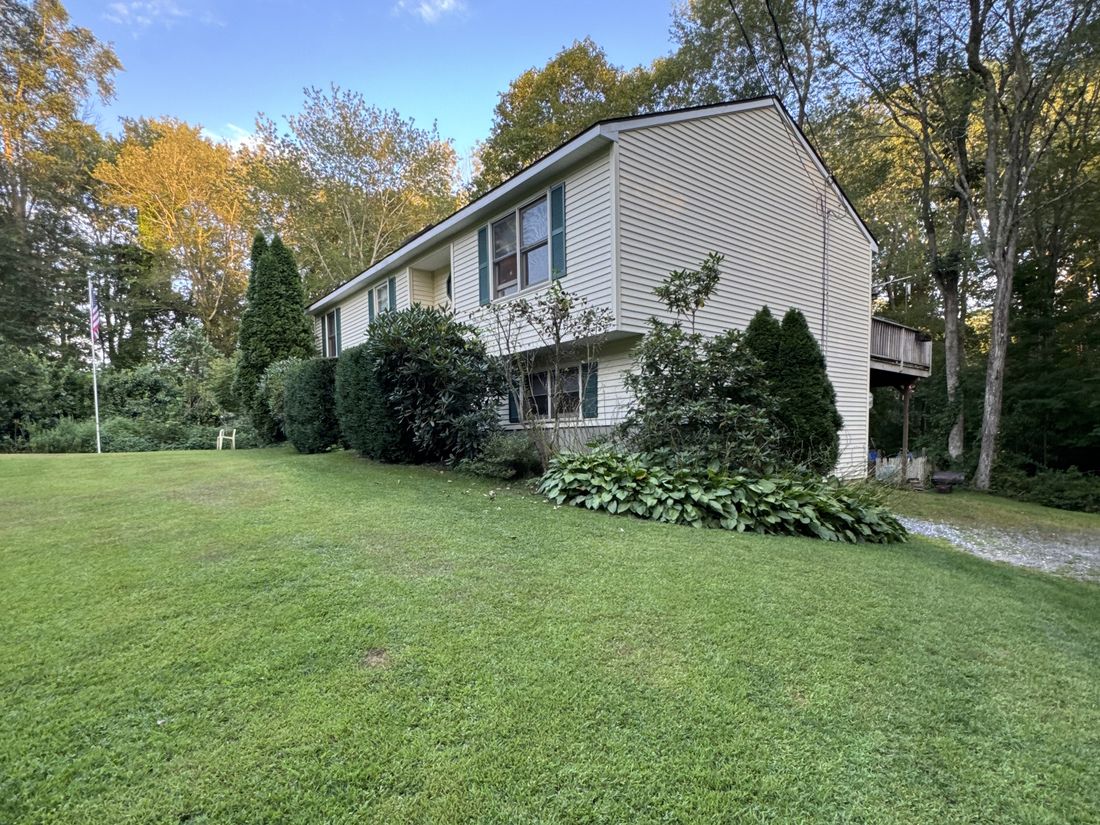
The house is paid off. It has been in the family since the seventies — a high ranch in Yorktown Heights, a colonial off Route 9 in Ossining, a two-family in Mount Vernon. Mom or Dad is gone, the will has been read, and there are three names on the deed now instead of one. Two of you want to sell. One does not. And every conversation about it for the last eight months has ended the same way.
This is the single most common reason an inherited Hudson Valley house sits empty for a year. It is not the market, and it is rarely the price. It is that New York gives every co-owner a real veto over the deed, and it gives every co-owner a way to go over everyone else's head — and most families do not find out how either of those works until they are already stuck. Here is what the law actually says, what a partition action really involves, and the far less dramatic routes that get everybody paid.
Heirs normally hold an inherited house as tenants in common, and a deed needs every co-tenant's signature — a majority cannot outvote a holdout. Any co-tenant can instead bring an action for partition under RPAPL Article 9. But most inherited family homes are “heirs property” under RPAPL 993, New York's Uniform Partition of Heirs Property Act, signed December 6, 2019 — and that statute makes the court order an appraisal, gives the co-tenants who want to keep the house 45 days to elect a buyout at the appraised value, weighs a long list of factors before allowing any sale, and requires an open-market sale rather than a courthouse auction if it does order one. Since 2024, someone who bought a share instead of inheriting it cannot start a partition action at all.
What you actually own once the estate closes
When a New York estate is distributed — or when someone dies without a will and title passes to their distributees — the heirs typically end up holding the property as tenants in common. That phrase does more work than people expect.
Each of you owns an undivided fractional interest in the whole house. Not the upstairs. Not the back half of the lot. A one-third interest in every square foot of it, which means every co-tenant has the right to possess and use the entire property, and none of them has the right to exclude the others. It also means the deed that conveys the house to a buyer needs every co-tenant's signature. Three siblings agreeing does not bind the fourth, and no amount of family logic changes that.
What each of you does have, individually, is the right to ask a court to end the arrangement. RPAPL 901 lets a person holding and in possession of real property as a joint tenant or tenant in common maintain an action for partition. It extends the same right to heirs entitled to the property as tenants in common whether or not they are in possession, and it lets an executor or administrator of an estate that owns a common interest bring the action with the Surrogate's Court's approval. Practically: whoever is most frustrated can file, and everyone else becomes a defendant.
Why one holdout stops everything
The shape of this is almost always the same across Westchester, Rockland and Putnam. One sibling stayed local and is living in the house, or storing thirty years of a parent's belongings in it. One moved to North Carolina and wants their share in cash. One is somewhere in between and would rather not pick a side. Nobody is being unreasonable, exactly — they simply want incompatible things from the same asset.
What makes the deadlock expensive is that the house does not pause while you negotiate. It keeps billing. The county and school taxes arrive on schedule, and in this market that is not a rounding error — our guide to what to do when Westchester property taxes have outgrown the house covers why. Insurance, heat through a Hudson Valley winter, a roof, a boiler, a lawn that has to be cut so the town does not write a ticket: all of it lands on whoever is willing to front it, which is usually the sibling who lives closest and resents it the most.
A partition court can eventually sort some of that out. RPAPL 945 lets the judgment adjust the rents and profits between the parties, and the accounting can take account of who actually paid the taxes, insurance and repairs. But that is a lawsuit, not a conversation, and it arrives at the end of a process measured in seasons rather than weeks.
If the estate is still open, this is a Surrogate's Court question
Timing changes the whole problem, and this is the part families most often miss.
While the estate is still open and an executor or administrator holds authority, the house is estate property and the Surrogate's Court can authorize or direct its disposition. SCPA Article 19 gives the court that power, and it says the court may entertain an application for a disposition even if the sale is or appears to be authorized by the will or by a statute — so a fiduciary who wants the court's blessing on a sale can ask for it. One person with legal authority selling one house is a far simpler transaction than four co-owners negotiating with each other.
Westchester, Rockland and Putnam each have their own Surrogate's Court, sitting in the county seat — White Plains, New City and Carmel respectively. If you are the executor and you already know the house is going to be sold, the cleanest version of this story is the one where it sells during administration and the heirs divide money instead of dividing a building. Our guide to selling an inherited Hudson Valley house from out of state walks through getting that authority and what the process looks like from a thousand miles away.
Once the estate closes and the deed is recorded in four names, that door shuts. From then on it is Article 9 and Supreme Court, not the Surrogate.
Partition: what a court can actually do
A partition action is brought in the State Supreme Court in the county where the property sits — White Plains for a Westchester house, New City for Rockland, Carmel for Putnam. It is a real remedy and it does work. It is also, on a single-family house, a blunt one.
The court's first decision is whether to divide the property physically or to sell it. RPAPL 901 permits a sale only “if it appears that a partition cannot be made without great prejudice to the owners.” A hundred acres upstate can sometimes be split. A raised ranch on a third of an acre in Nanuet cannot, so on the houses this article is about, partition means sale.
From there the statute runs a long, formal sequence: necessary and permissible defendants are joined, the court makes an inquiry as to creditors, an interlocutory judgment directs the sale, a referee conducts it, the referee reports and the court confirms the sale, a final judgment issues, and only then are the proceeds distributed. None of those steps is optional and none of them is fast.
The house comes off the market while the case runs. Under CPLR 6501 a notice of pendency may be filed in any action in which the judgment demanded would affect the title to, encumbrance of, or the possession, use or enjoyment of real property — a partition action squarely qualifies. Anyone whose conveyance is recorded after that filing is bound by everything that happens in the case as if they were a party, which is a polite way of saying no ordinary buyer and no title company will touch the property until it resolves.
The legal bills come out of the house. RPAPL 981 provides that on a sale, the costs of each party and the expenses of the sale are deducted from the proceeds and distributed as the court orders, and the court may direct that the costs of a trial, a reference or another proceeding be paid out of a party's share. The fight is funded by the inheritance.
That is the honest case against partition as a plan. It is a lever you can pull, and it is a reasonable last resort when someone genuinely will not engage. It is a poor first move.
New York's heirs property act changed the odds
Everything above is the general Article 9 machinery. For most inherited family houses it is not the machinery that applies, because in December 2019 New York adopted the Uniform Partition of Heirs Property Act at RPAPL 993. The Governor signed it on December 6, 2019, and it governs partition actions filed on or after that date.
Property is “heirs property” under the statute when it is held in tenancy in common and, as of the filing:
- there is no agreement in a record binding all of the co-tenants that governs partition of the property;
- at least one co-tenant acquired title from a relative; and
- any one of the following is true: twenty per cent or more of the interests are held by relatives, or twenty per cent or more are held by people who acquired their interest from a relative, or twenty per cent or more of the co-tenants are relatives, or a co-tenant who acquired title from a relative resides in the property.
Read that list against a house three siblings inherited from a parent, with one of them living in it and no written co-ownership agreement anywhere. It qualifies several times over. That is deliberate — the act exists precisely because forced auctions of family homes had been stripping equity out of families who never intended to be in litigation.
Once a case is under RPAPL 993, four things change:
- The court determines a value first. It orders an appraisal by a disinterested real estate appraiser licensed in New York, unless the co-tenants agree on the value or the court concludes the evidentiary value of an appraisal is outweighed by its cost. Everyone then argues from one number instead of five opinions.
- A buyout comes before a sale. The co-tenants who did not ask to sell get the first chance to buy out the ones who did, at that appraised value — the mechanics are in the next section.
- Sale is not automatic even then. Before ordering one, the court weighs whether partition in kind would cause great manifest prejudice, considering the practical divisibility of the land, whether dividing it would lower the total value against a sale of the whole, how long the co-tenants have owned or possessed it, any sentimental or ancestral value, the current lawful uses and the harm to a co-tenant living there, each party's contribution to taxes, insurance and maintenance, the price and terms on which the interests were acquired, and any other relevant factor.
- If it does order a sale, that sale is an open-market sale unless the court finds that sealed bids or an auction would be more economically advantageous and in the best interest of the co-tenants as a group. The default is no longer a distressed sale on the courthouse steps; it is a listing, at a price anchored to the appraisal.
The buyout right: 45 days to elect, 60 days to pay
This is the part of RPAPL 993 that resolves the most family standoffs, and the part with the hardest deadlines.
After the court determines the value, it sends notice to the parties identifying the co-tenants who requested partition by sale. Any co-tenant who did not request a sale may elect to buy all of those interests. The election must be made not later than forty-five days after the notice of the determination of value, and payment is due not sooner than sixty days after the date the notice was sent. Where more than one co-tenant wants to buy, a co-tenant who acquired the interest from a relative and resides in the property has first priority.
On paper this is exactly what the sibling who wants to keep the family house has been asking for. In practice, forty-five days is a very short runway. You are financing a purchase of the fractional interests you do not already own, on a property that is mid-litigation, often with deferred maintenance and sometimes with an unresolved oil tank or a septic system that will not pass sitting in the file. Lenders are not enthusiastic.
A lot of families reach this window and discover something useful: the person who wanted to keep the house wanted to keep it at no cost, and cannot or will not fund a buyout at a real appraised number. That is not a betrayal, it is just information — and it is usually the point at which selling the whole house and dividing the money stops being the outcome one person is resisting and starts being the outcome everybody can live with.
Nobody can buy one sibling's share and force a sale
You may get a letter offering to buy just your interest in the family house. Before 2024 that was a viable strategy for a certain kind of buyer: purchase one frustrated heir's fraction cheaply, then file for partition and force the rest of the family into court. New York closed that door.
Part O of the 2024 New York State budget added two subdivisions to RPAPL 993:
- Subdivision 12 provides that no partition action related to heirs property may be initiated by a party that purchased or otherwise acquired their share by means other than inheritance. A buyer of a fractional interest simply cannot start the case.
- Subdivision 13 gives the other co-tenants a right of first refusal. Notice is made in the manner set out in section 308 of the CPLR, and the co-tenants have one hundred eighty days from being notified of the offer to match it. If a share is sold without that notice, they have one hundred eighty days after they are made aware of the sale to exercise the right.
We will be direct about where we sit in that picture, because it is a fair question to ask a cash buyer. We do not buy fractional interests in inherited houses. We buy the property from everyone who owns it, at one price, with every co-tenant signing — which is the only version that leaves a family finished rather than partly finished. If someone is offering to buy your share alone, ask them plainly what they intend to do with it, and read subdivisions 12 and 13 before you sign.
Everyone ready to be done with it?
Tell us about the house and we will give all of the owners one number to look at — no repairs, no showings, no commission, and we cover the transfer tax, title and closing costs.
What the house costs while you argue
Whatever route you take, the meter is running, and the carrying cost of a deadlocked inherited house in this county is genuinely large. It is worth putting real lines on it before another season goes by.
- Taxes. County, town and school taxes keep coming on a house nobody is living in. If they go unpaid long enough the county's process starts, and our Westchester County tax foreclosure guide explains where that ends.
- Insurance. Call the carrier and tell them the truth about who is living there. An unoccupied house is not the risk the policy was written for, and finding out that coverage lapsed after a pipe lets go in January is the worst possible sequence.
- Winter. Heat has to stay on or the plumbing goes. Ice dams, a roof nobody is watching, gutters nobody is clearing — a vacant Hudson Valley winter is hard on a house that was already tired.
- Deferred maintenance that becomes a disclosure problem. The longer it sits the more there is to tell a buyer about, and New York's property condition disclosure obligations are stricter than most sellers remember.
- Closing costs that do not shrink. The state transfer tax, and the municipal transfer tax if the house is in Yonkers, Mount Vernon or Peekskill, are the same whenever you sell — our breakdown of what it really costs to sell a house in Westchester and the Hudson Valley has every line, including the estimated tax New York collects at closing from heirs who live out of state.
Divide any of those by three and it still comes out of the same inheritance the family is arguing about.
Agree on the number, not on the outcome
Most of these standoffs are not really about whether to sell. They are about a suspicion that somebody is being taken advantage of, and that suspicion survives as long as everybody is working from a different number in their head.
So start where the statute would start you anyway. Get one determination of value that everyone accepts — if the case ever reaches court under RPAPL 993, a judge will order exactly that, using an appraiser you did not choose, on a schedule you do not control. Doing it voluntarily costs less and keeps the decision in the family.
Then get concrete. Who actually wants the house, and can they fund a buyout at that value? What has each person already put in for taxes, insurance and repairs, and does the split account for it? If the estate is still open, is the executor running the transaction, or is it being negotiated by committee? And what is the real net on a sale — not the gross number on a listing sheet, but that figure minus commission, minus preparation, minus the transfer tax, minus every month the house sits. Our side-by-side of a cash offer against listing with an agent lays the two out, and the frequently asked questions page covers how our offer and timeline work.
Selling as a group, when the group is split
Here is the honest version, because a cash offer is not a magic solvent for a family disagreement and we are not going to pretend otherwise.
What we can do is remove most of the variables people are actually fighting about. There is one number, given to all of the owners at the same time. There is no commission, no prep spend and no repair list, and we cover the transfer tax, the title fees, the recording charges and the closing costs — the figure we quote is the figure the estate divides. There are no showings to coordinate between three households, no appraisal to argue with, and no financing contingency that can collapse in week six and put everyone back at the start. The closing date is set at the beginning, so an executor can time it around the Surrogate's Court and the out-of-state heirs can book flights once. Our Yorktown Heights sale for a family after forty-five years in the house is a fair example of how a long-tenure property with a lot of accumulated history actually moves.
What we cannot do is buy a house from some of its owners. Every co-tenant signs, or there is no sale — which is the same rule a listing agent works under, and the reason the conversation above still has to happen. If the estate has not closed yet, we work with the executor. If it has, we need everyone on the deed.
And the part people want stated plainly: our number is below what a fully cleaned out, fully repaired version of the same house would fetch on the open market after a few months of showings. It has to be. The comparison worth making is not our figure against that gross price — it is our figure against that price minus commission, minus the clean-out and the repairs, minus your city's transfer tax, minus another six or nine months of Westchester taxes and insurance while three people negotiate, and minus the real chance that the whole thing ends up in an Article 9 case whose costs come off the top under RPAPL 981. Run it that way and the gap is usually a lot narrower than it first looks, and what is left is the price of being finished.
If that is where your family has landed, we buy inherited houses across Yonkers, New Rochelle and the rest of the Lower Hudson Valley, and our inherited property page explains what the process looks like from the first call.
One closing note. This is education, not legal advice, and partition and estate law is exactly the area where a general article stops being useful. Before you file anything, sign anything, or agree to a buyout number, put your own facts in front of a New York estate or real estate attorney.