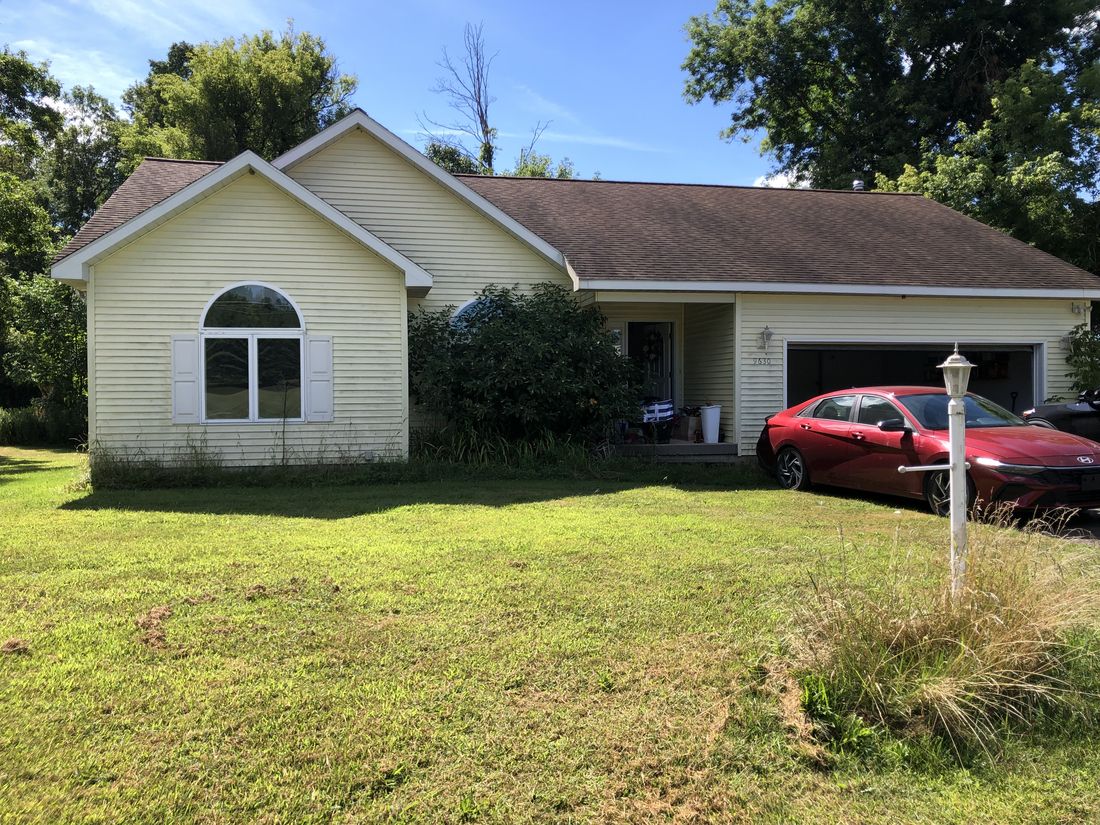
The calls usually come in the second winter. The house has been empty since the move, or since the funeral, or since the last tenant left, and it was supposed to be for a month or two. Now there is a tax bill, an oil delivery, a snow contract, a neighbor texting about the gutters, and a letter from the insurance company asking whether anyone still lives there.
An empty house in Westchester, Rockland or Putnam is not a neutral holding pattern. It costs money every month, the standard homeowners policy starts to shrink around it, and in some cities it triggers its own registration rules and fees. Here is what actually changes when a Lower Hudson Valley house goes vacant, and how to decide what to do with it.
A vacant house keeps costing you taxes, heat, insurance and upkeep, and a standard HO-3 homeowners policy stops covering vandalism and broken glass once the house has been vacant for more than 60 consecutive days, and won't pay for frozen pipes in an empty house unless the heat was kept on or the water was shut off and the system drained. Yonkers requires owners to register a vacant building within 30 days, file a plan and pay an annual fee that starts at $1,000 for a one-family house. Mount Vernon requires owners who don't live in the city to file an annual registration naming a local managing agent. Check your own village or town, then decide whether to rent, list or sell it as it stands.
What an empty house keeps costing you
The mortgage payment is the cost everybody sees. The rest is easier to miss, because it arrives in separate bills from separate places:
- Property taxes. Westchester, Rockland and Putnam bills keep coming whether anyone lives there or not, split between the town or city bill and the school bill. Our guide to Westchester property taxes explains why they run so high here.
- Heat. An empty house still has to be heated through a Hudson Valley winter, or professionally winterized. Many older houses here heat with oil, so that means deliveries to a house nobody is watching.
- Insurance. Often more expensive once the house is empty, for less coverage. More on this below.
- Upkeep. Lawn, leaves, gutters, snow and ice on the walk, and someone to look in after every storm.
- Your time. Every problem at an empty house needs somebody to drive there and open the door.
We will not put a monthly figure on this for you, because it depends entirely on the house and the town. But it is worth adding up your own total before you decide to wait for spring, a better market or a family decision. Write down the mortgage, one-twelfth of both tax bills, the insurance, the heating fuel and the upkeep, and multiply by the number of months you realistically expect the house to sit.
The 60-day insurance problem
A standard homeowners policy is written for a house someone lives in. The most common form in the country, the ISO Homeowners 3 – Special Form (HO-3), has two provisions that bite once the house empties out:
- Vandalism and glass breakage. The HO-3 does not cover vandalism and malicious mischief, or the breakage of glass, if the dwelling has been vacant for more than 60 consecutive days immediately before the loss. A dwelling under construction is not treated as vacant.
- Frozen pipes. The HO-3 does not cover freezing of the plumbing, heating or air-conditioning system while the dwelling is vacant, unoccupied or being constructed — unless you used reasonable care to maintain heat in the building, or to shut off the water supply and drain the systems and appliances. That one applies from the first day the house is empty, not after 60 days.
Your own policy may not be a standard HO-3, and many carriers use their own forms with different time limits, so read the declarations page and the conditions section, or ask your agent directly. Tell the carrier the house is empty. The usual fixes are a vacancy endorsement on the existing policy or a separate vacant-dwelling policy, and either one generally costs more than the coverage you had while living there.
A burst pipe in an empty house is rarely found the same day. Water runs until someone notices, often days later. If the heat had failed and the water was still on, that loss may fall squarely inside the freezing exclusion. If the house has sat for more than 60 days, a break-in or broken window may not be covered either.
Getting an empty house through a Hudson Valley winter
You have two honest choices, and they line up with the two ways the HO-3 lets you keep freeze coverage.
Keep the heat on
Leave the heat at a steady temperature, keep the fuel supply topped up, and have someone check the house on a schedule, especially after a cold snap or a power outage. On oil heat, a tank that runs dry means a cold house and a service call before the burner will relight. If the tank is an old buried one, our guide to selling a house with a buried oil tank covers what that means for the sale.
Winterize it
Have a licensed plumber shut off the water at the main, drain the supply lines, the water heater and, on a hot-water or steam system, the boiler and heating loops, and put antifreeze in the traps and toilets. Keep the paperwork. It shows the carrier you took reasonable care, and it tells a future buyer what has to be undone before the water goes back on.
Either way, someone should be looking in regularly: clearing the walk after snow, collecting the mail, checking the roof and gutters after storms, and making sure the house does not look empty from the street.
Yonkers: the vacant building registry
Yonkers has one of the most detailed vacant-property laws in the Lower Hudson Valley. It sits in Chapter 58, Article VIII of the City Code, the Housing and Building Maintenance Code, first adopted as Local Law No. 1-2010 and amended several times since. The main points:
- What counts as vacant. The definition is broad. It covers a building that is unoccupied, and expressly lists one left unoccupied for 45 days, one that is boarded up or unsecured, one that is illegally occupied or not habitable, and one that is unoccupied with exterior or multiple code violations. Condominiums are exempt.
- Register within 30 days. The owner registers with the Department of Housing and Buildings within 30 days after the building becomes vacant, or within 30 days of being notified to register, and renews every year by January 31. The form asks for the owners, any property manager, all known lienholders and a number where someone responsible can be reached at all times.
- File a plan. The owner submits a vacant building plan the Commissioner must approve: demolish it, keep it secured and maintained while vacant (with a statement of why and for how long), or rehabilitate it within 365 days. Each option comes with a performance guaranty — a bond, letter of credit or cash escrow.
- Pay the annual fee. For residential property, $1,000 for the first unit and $600 for each additional unit in the first year, then $2,000 for the first unit and $1,000 for each additional unit in each later year. A fee not paid within 30 days of its due date draws a $500-a-month penalty and possible prosecution.
- Keep it up. Proof of registration is posted at the main entrance, and a building vacant for more than 180 days has to keep its exterior walls, doors and windows weathertight and in good condition.
Two provisions matter directly when you sell. First, the fee must be paid before the city will issue any building permit, certificate of occupancy or certificate of completion other than a demolition permit. Second, all delinquent fees are to be paid by the owner before the ownership is transferred. If they are not, the new owner has to pay the annual fee within 30 days of the transfer, and must register the building within 30 days of taking title and follow the plan already on file. In practice that means the registry turns up in the buyer's title and municipal searches, and it becomes a closing item.
There are narrow exemptions. After a fire or extreme weather, the owner can request 45 days' relief from registration in writing, and a property under an active building permit can request six months. Neither happens automatically.
A two- or three-family house in Yonkers pays per unit, so an empty multi-family costs more to carry here than a one-family. If that is your situation, see our guide for Yonkers landlords selling a multi-family and our Yonkers page.
Mount Vernon, Briarcliff Manor and the rest of the region
Mount Vernon: registration for owners who live elsewhere
Mount Vernon's rule is not about vacancy. It is about where the owner lives. Under Chapter 198 of the City Code, an “absentee real property owner” is one who is not a permanent resident of the city (a corporate owner counts as absentee unless its principal office is in Mount Vernon). An absentee owner must file an annual registration with the Building Department naming a managing agent whose residence or place of business is in Mount Vernon. That agent receives notices of Building Code and Public Works violations and can be served with legal papers for the owner. The designation has to be notarized, the agent's consent has to be notarized too, and failing to file and pay the fee is punishable by a $250 fine.
That catches exactly the people who most often end up with an empty house: an heir who lives in another state, or an owner who has already moved. If you would rather sell than keep filing, we buy houses in Mount Vernon whether they are empty or not.
Briarcliff Manor: a village-level registry
Smaller municipalities adopt these laws too. The Village of Briarcliff Manor added a vacant building registry in 2021 (Chapter 90, Article V of its code). A single-family house there counts as vacant after 180 days unoccupied, most other buildings after 60, and the owner registers within 30 days. The fee is set in the village's fee schedule, and a new owner must register within 30 days of taking title.
Everywhere else
Rules differ across the dozens of cities, towns and villages in Westchester, Rockland and Putnam, and more of them are adding registries. Before a house has been empty for a month, call the building department of the municipality it sits in and ask two questions: do you have a vacant building or absentee owner registration requirement, and is there anything open on this property? The second question also surfaces old permits and violations, which our guide to open permits and unpermitted work explains how to deal with.
Why Hudson Valley houses end up empty
Almost nobody plans to own a vacant house. It usually happens in one of a few ways:
- An inheritance. The owner died, the heirs live elsewhere, and nobody can sell until the Surrogate's Court issues letters. Our guide to selling an inherited Hudson Valley house from out of state covers the probate timeline, and when heirs can't agree covers what happens when the family is split.
- A move. A job, a new house or family elsewhere, and the old house did not sell first. See selling when you're relocating.
- A parent moving into care or in with family. Our downsizing guide covers tax exemptions and timing.
- A rental between tenants that never got re-rented, often because it needs more work than the owner wants to put in.
Your options for a vacant house
1. Rent it out
Renting turns a cost into income, but it makes you a New York landlord, usually after some repairs, and a tenant who later has to leave is a much slower exit than an empty house. It suits an owner who wants to keep the property long-term and can manage it or pay someone to. Our tired landlord page is honest about the other side of that decision.
2. List it with an agent
If the house is in decent condition, listing usually brings the highest price. Plan for how an empty house shows (some agents recommend staging), who meets inspectors and appraisers, and how you will keep the insurance, heat and registrations current through the listing period and the time to closing. A vacant house on the market is still a vacant house.
3. Sell it as-is to a direct buyer
A direct buyer purchases the house in its current condition, with no showings, no repairs, no clean-out and no financing contingency. The price is below what the same house would bring after repairs and a full listing, because the buyer takes on that work and the carrying costs. What you get back is a closing date you choose and an end to the monthly bills. Our side-by-side of a cash offer against listing lays the two routes out line by line, and our breakdown of what it really costs to sell in Westchester shows what comes out of a traditional sale.
Tired of paying for a house nobody lives in?
Tell us about the house and we'll make an offer on it as it is — nothing to fix, nothing to clear out, and we cover the transfer tax, title and closing costs.
How we buy vacant houses
We buy vacant houses across Westchester, Rockland and Putnam, and we are used to working with owners who no longer live nearby. One example, from outside our usual area, is a ranch in Holland Patent whose owner had already moved to Pennsylvania and was driving back again and again to check on an empty house.
You don't have to come back. We can walk the house with a local contact, a neighbor or the lockbox, and New York closings can be handled by mail or through your attorney.
We buy it as it stands. Winterized, half-emptied, full of furniture, or needing every system replaced — it is all part of the as-is condition we buy. Leave behind whatever you don't want.
We deal with the paperwork the house has collected. If a Yonkers house is on the vacant building registry, or a Mount Vernon house has an absentee registration, tell us early so the fees and filings can be sorted out before closing rather than at the table.
We cover the costs. There is no commission, and we pay the transfer tax, title fees, recording charges and closing costs. Our frequently asked questions cover how our offers and timelines work.
One closing note. This is general information, not legal or insurance advice. Municipal codes are amended regularly and insurance policies differ, so confirm the current rules with the building department, read your own policy with your agent, and talk to your New York real estate attorney before you sign anything.