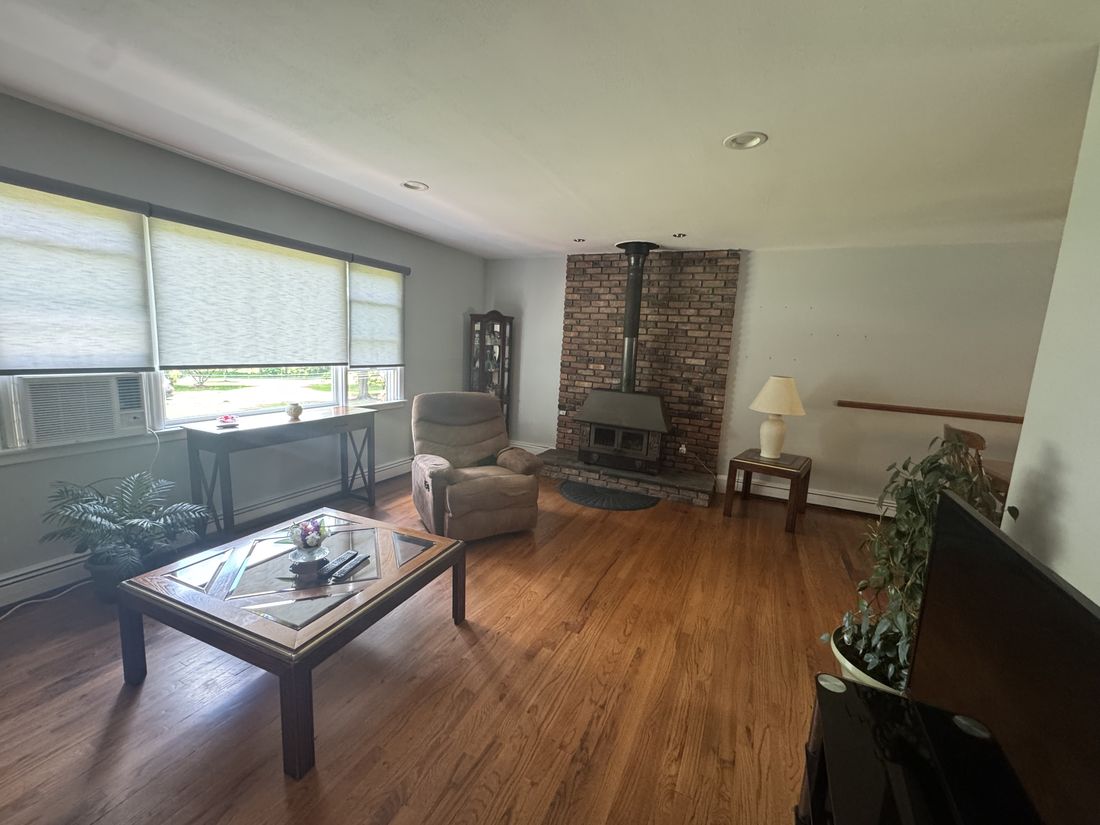
Nobody calls us and says the word first. They say the house is “full.” They say Mom “kept a lot.” They say they got the front door open about a foot and a half and then stopped, and they have not been past the hallway since. Somewhere in Mount Vernon or Mahopac or Nanuet there is a house that has quietly filled up over twenty or thirty years, and now a son or a daughter or a niece has to decide what happens to it — usually while also dealing with a hospital, a care facility or a funeral.
If that is where you are, the first thing worth knowing is that a hoarded house is not really a cleaning problem. It is a legal-authority problem, a safety problem and a sequencing problem, in roughly that order, and the families who get through it fastest are the ones who sort those out before anybody rents a dumpster. Here is how it actually works in Westchester, Rockland and Putnam.
You do not have to empty a hoarded house to sell it — a direct buyer will take it with the contents inside. What you do need is the right person signing. If the owner is alive and able, it is their decision. If they cannot manage their affairs, a durable power of attorney with real estate authority (General Obligations Law 5-1501A and 5-1502A) lets their agent sell. If there is no power of attorney, the route is a court-appointed guardian under Mental Hygiene Law Article 81, and the guardian can only do what the court authorizes. If the owner has died, it is the executor or administrator. Before the sale, pull out documents, valuables and anything hazardous — Westchester residents can take chemicals, paint, propane cylinders and old medications to the county's Household Material Recovery Facility in Valhalla by appointment.
Why a hoarded house is a different kind of sale
Every house sale in New York runs on the assumption that people can see the property. The buyer walks through it. Their inspector opens the electrical panel and looks at the boiler. The lender sends an appraiser who has to measure rooms and photograph them. A hoarded house quietly breaks every one of those steps.
- Nobody can see the condition. The contents hide the floors, the walls, the plumbing and sometimes the ceilings. A buyer is being asked to price a building they cannot look at, and they will price the uncertainty accordingly.
- Financed buyers struggle to close. An appraiser or inspector who cannot reach the rooms, the mechanicals or the basement cannot give a lender what it needs. Most buyers of a Westchester house are using a mortgage, which shrinks the pool quickly.
- Showings are close to impossible. You cannot stage it, you cannot photograph it honestly, and you may not be able to let strangers walk through it safely.
- The problems behind the clutter are real. Long-hoarded houses tend to have been closed to repair people for years. A slow leak, a dead heating system, pests, mold, a failed roof — any of them can be sitting behind the boxes.
None of that makes the house unsellable. It changes which buyers can realistically buy it, and it makes the order you do things in matter a great deal more than usual.
First question: whose decision is it?
This is the part families skip, and it is the part that stalls sales months later. The person who has been dealing with the house is very often not the person who owns it.
If the owner is alive and able to understand what a sale means, it is their house and their decision. That is true even if the house is unsafe, even if everyone else in the family can see it has to go, and even if the owner is making a choice you think is wrong. Hoarding disorder is recognized as its own mental health condition, and for the person living with it the belongings are not trash. Clearing a house out from under an owner who has not agreed tends to end the conversation about selling rather than start it — and it is their property you are throwing away.
If the owner can take part, the best version of this is simple: they sign the contract and the deed, and the family helps with everything else. A buyer who will close with the contents still inside means nobody has to force the question of what stays and what goes before the sale; the owner takes the things that matter to them and the rest is handled afterward.
When the owner cannot take part — they are in the hospital, in memory care, or no longer able to understand the decision — somebody else needs legal authority to sign. In New York there are really only three ways that happens.
Selling with a power of attorney
If your parent signed a power of attorney while they still had capacity, you may already have everything you need.
New York's rules are in Title 15 of Article 5 of the General Obligations Law, and three sections do most of the work:
- It survives incapacity. Under GOL 5-1501A a power of attorney is durable unless it expressly says it ends when the principal becomes incapacitated. Acts the agent takes during the incapacity bind the principal as if they had capacity. That is the whole point of the document.
- Real estate authority covers a sale. Where a statutory short form grants authority over “real estate transactions,” GOL 5-1502A says the agent may sell, convey and otherwise dispose of any interest in land; contract with any person on terms the agent selects; execute, acknowledge and deliver a deed; and do “any act of management or of conservation” — including insuring the property, paying taxes, hiring labor and making repairs. In other words: the agent can sign the contract, sign the deed, and look after the house until closing.
- It has to have been signed properly. GOL 5-1501B requires the principal to have signed, initialed and dated it while they had capacity, with the signature acknowledged the way a deed is acknowledged and witnessed by two people who are not named in it as agents or gift recipients (the notary may be one of the witnesses). The agent also has to sign it with an acknowledged signature before acting, and the power takes effect for that agent on the date their own signature is acknowledged.
Find the original, check that it grants real estate authority, and check that the agent signed it. A power of attorney that was never signed by the agent, or one that only covers banking, is a problem you want to discover in week one. New York's Real Property Law 294 allows an instrument containing a power to convey real property to be recorded with the county clerk, and title companies commonly want the power of attorney itself in the closing package alongside the deed — so expect them to ask for the original. It is also worth asking your attorney whether the document was executed under the rules in effect when it was signed; the statute was amended in 2021, and forms signed under the earlier rules generally remain valid.
A power of attorney is an agency relationship, not a blank cheque. The agent is acting for the owner and on the owner's behalf, and the sale proceeds belong to the owner. If siblings are going to question the decision later, it is far easier to be transparent at the start — share the offer, share the net, and put the money where it is supposed to go.
No power of attorney: Article 81 guardianship
If there is no power of attorney and the owner can no longer manage their own affairs, nobody in the family has the authority to sell the house. Not the child who lives closest, not the child who has been paying the taxes, and not the spouse of either. The route is a guardianship proceeding under Article 81 of the Mental Hygiene Law.
A few things about Article 81 surprise people:
- A messy house is not incapacity. Under MHL 81.02 the court may appoint a guardian where it is necessary to provide for the person's personal needs or to manage their property, and the person either agrees to the appointment or is found incapacitated. Incapacity has to be shown by clear and convincing evidence that the person is likely to suffer harm because they cannot provide for their needs or manage their property and cannot adequately understand and appreciate the consequences of that inability. The court looks at how the person actually functions day to day. Plenty of people with a hoarded house would not meet that test.
- Family members can start it, and so can the county. MHL 81.06 lets a petition be filed by, among others, the person themselves, a presumptive distributee (in practice, a close relative who would inherit), the person they live with, anyone otherwise concerned with their welfare — which expressly includes the county department of social services — and the head of a facility where the person is a patient or resident.
- The guardian gets only the powers the court grants. The statute directs the court to use the least restrictive form of intervention, and MHL 81.21 says the court “may authorize” the guardian to exercise the property-management powers that are necessary and sufficient. The list includes entering into contracts and marshalling assets — and, notably, leasing the primary residence for up to three years. If the order does not give the guardian authority to sell the house, the guardian has to go back to the court for it.
Guardianship is a real court case with a court evaluator, a hearing and ongoing reporting obligations for the guardian, and it takes time. If your parent still has capacity today, the single most useful thing you can do is talk to an elder-law attorney about a power of attorney now, while it is still possible to sign one.
If the owner has died
When the owner has passed away, the power of attorney ends with them and the question becomes who has authority over the estate. That is the executor named in the will once the Surrogate's Court issues letters, or an administrator if there was no will. Westchester, Rockland and Putnam each have a Surrogate's Court in the county seat — White Plains, New City and Carmel.
Two practical points specific to a hoarded estate house. First, search before you clear. The original will, deeds, life insurance policies, bank statements and savings bonds are very often somewhere in the contents, and so is cash. Second, if there are several heirs, agree in writing how the contents will be handled before anyone starts, because “who threw out what” is one of the most reliable ways for an estate to turn into a fight. Our guides to selling an inherited Hudson Valley house from out of state and what happens when heirs can't agree on selling cover the estate side in detail.
Before anyone goes in
We walk through heavily hoarded houses regularly, and the honest advice is: do not treat it like an ordinary clear-out, and do not go in alone.
Blocked exits and unstable piles. Paths narrow, stacks shift, and the way you came in may not be a way out. Know two exits before you start moving anything.
Hidden structural damage. Years of weight and years without repairs can mean soft floors, especially in bathrooms and kitchens where leaks go unnoticed.
Air quality. Mold, dust and animal or pest waste are common. Wear a properly fitted respirator rather than a paper mask, and gloves.
Fire and chemicals. Old paint thinners, pesticides, pool chemicals, kerosene and propane cylinders end up buried in the contents. Space heaters and extension cords are often in use. Do not turn on long-dormant heating or electrical equipment to “see if it works.”
If the house is so full that you cannot safely reach the rooms, stop. You do not need to be the person who clears it, and you do not need it cleared in order to sell it.
What to pull out before you sell
If you are selling to a buyer who will take the contents, the goal is not to empty the house. It is a targeted search for the handful of things that must not leave with it.
- Legal and financial paper. The deed, any will or trust, the power of attorney, recent property tax and school tax bills, mortgage and home equity statements, insurance policies, bank and brokerage statements, tax returns, savings bonds and stock certificates. Bills tell you which accounts exist.
- Valuables and cash. Jewelry, watches, coins, and cash tucked into books, freezers, coat pockets and envelopes. It is common. Look before anything is bagged.
- Photographs and personal items the family will want — decide who gets to choose, and give them a date.
- Medications. Old prescriptions should not stay in the house and should not go in the trash.
- Hazardous materials you can safely reach: paint, solvents, pesticides, pool chemicals, fluorescent bulbs and small propane cylinders.
Westchester County's Household Material Recovery Facility at 15 Woods Road in Valhalla accepts household hazardous waste from county residents year-round, by appointment only, Tuesday through Saturday from 10 a.m. to 3 p.m. Book online or through the Recycling HelpLine at (914) 813-5425, and bring a current government-issued photo ID as proof of residency. It takes oil- and latex-based paint, flammable liquids, pesticides, pool chemicals, fluorescent bulbs, rechargeable batteries, mercury thermostats, refrigerant appliances, and 20-pound barbecue and 1-pound camping propane tanks. Expired or unused medications are accepted only on the first Tuesday of each month (plus the April and October national take-back days), in their original containers, and the facility will shred up to four file boxes of confidential personal documents per appointment. It does not accept asbestos, construction debris, other propane tank sizes, medical sharps, or smoke detectors. Fees can apply to residents of Somers, North Salem, Lewisboro, Pound Ridge, Bedford, North Castle and New Castle, whose municipalities do not fund the facility. Rockland and Putnam residents should check their own county's household hazardous waste program.
Anything you cannot find or cannot safely reach can stay. That is the entire advantage of selling a hoarded house as-is: the search is yours, the clear-out does not have to be.
When the owner still lives there and is at risk
Sometimes the house cannot be sold yet because the owner is still in it, will not leave, and is not safe. That is a different and harder situation, and it is not one a buyer should be anywhere near.
In Westchester, the county Department of Social Services runs Adult Protective Services, which investigates reports of abuse, neglect and financial exploitation of adults 18 and older who, because of physical or mental impairments, cannot protect themselves and have no one available who is willing and able to assist responsibly. Its intake line is (914) 995-2259, Monday to Friday from 9 a.m. to 4:30 p.m., with after-hours emergency services at (914) 995-2099. The New York State adult services helpline is (844) 697-3505. Rockland and Putnam residents should contact their own county's department of social services.
Understand the limits going in. The county is clear that APS usually cannot provide services to someone who refuses them, because adults have the right to make their own decisions; it will intervene when a person is at risk and unable to understand the potential harm, and involuntary services require a mental health assessment and a court. APS services can include arranging assessments, homemaker and housekeeper help within limits, finding other living arrangements and, in the long term, pursuing guardianship. And New York's Social Services Law gives people who make a good-faith referral immunity from civil liability — so if you are worried, you can call.
Can't face the clear-out?
You don't have to. Tell us about the house and we'll make an offer on it exactly as it sits — take what matters, leave the rest, and we cover the transfer tax, title and closing costs.
Your three real options
Once the authority question is settled, a hoarded house in this market generally goes one of three ways. None of them is right for every family.
1. Clear it, repair it, list it
This produces the highest sale price, and it is the right call when the house is structurally sound, the family has time and money to front, and someone local can manage it. The costs are the ones people underestimate: professional clean-out crews and dumpsters, possible mold or pest remediation, whatever repairs turn up once the floors are visible, and months of carrying costs while all of that happens — before the house is even listed. Then you pay commission and the usual closing costs on the sale.
2. Clear it enough to list it as-is
A middle path: remove enough that buyers and inspectors can get through, then list without repairs. It saves the renovation, but in practice the buyers for a visibly neglected house are mostly investors and cash buyers anyway, and you have still paid for a partial clean-out and waited through a listing period to reach them.
3. Sell it as-is, contents and all
A direct buyer purchases the house in its current condition with the contents inside. No clean-out, no repairs, no showings, no appraisal and no financing contingency. The price is lower than a cleared and renovated house would bring, because the buyer is taking on the clean-out, the unknown repairs and the risk. What you get back is time and certainty — which, for a family also handling a parent's care or an estate, is often the scarcer resource. Our side-by-side of a cash offer against listing with an agent lays the two routes out line by line.
What is behind the boxes still matters
Selling as-is does not mean selling blind, and it does not switch off New York's disclosure rules. The seller's property condition disclosure obligations apply to residential sales whether or not the house is full, and an agent acting under a power of attorney, a guardian or an executor may know very little about the property's history. Say what you know, say what you don't, and don't guess.
Hoarded houses across the Lower Hudson Valley also tend to carry the same older-house issues as everyone else's — they have just been hidden for longer. The ones we see most:
- An abandoned or buried heating-oil tank from before a gas conversion.
- A septic system or well in northern Westchester, Putnam or Rockland that nobody has serviced in years.
- Open permits or unpermitted work — a finished basement, an enclosed porch — that will surface when a buyer's title company pulls the municipal file.
The costs of waiting
A hoarded house rarely gets cheaper to hold. The county, town and school taxes in Westchester keep arriving whether anyone lives there or not. Heat has to stay on through a Hudson Valley winter or the pipes go, and in a house nobody can walk through, a burst pipe can run for days. Call the insurance carrier and tell them the truth about occupancy; many homeowners policies treat a vacant house very differently from an occupied one, and the time to learn that is before a claim.
The closing costs, meanwhile, are the same whenever you sell. Our breakdown of what it really costs to sell a house in Westchester and the Hudson Valley covers the state transfer tax, the city transfer taxes in Yonkers, Mount Vernon and Peekskill, and the rest of the lines on a seller's closing statement.
How we handle a hoarded house
We buy houses like this across the Lower Hudson Valley, and we are going to be straightforward about what that looks like.
We make the offer on the house as it is. You do not have to clean, sort, haul or repair anything. Take the papers, valuables and keepsakes you want, and leave the rest — our crew handles the clear-out after closing. See how our as-is purchases work.
We work with whoever has the authority. The owner, an agent under a power of attorney, a guardian, or an executor — we will want to see the document that gives them the right to sign, the same as any title company would, and we will time the closing around a court if one is involved.
We cover the costs. There is no commission, and we pay the transfer tax, the title fees, the recording charges and the closing costs, so the number we quote is the number the owner or the estate receives. You pick the closing date.
We keep it discreet. No sign on the lawn, no open houses, no neighbors walking through. For a lot of families that matters as much as the money.
And the part people want said plainly: our offer is below what the same house would bring after a full clean-out, remediation, repairs and a few months on the market. It has to be — we are taking on all of that work and all of the unknowns. The comparison worth making is our number against that higher price minus the clean-out, the repairs, the commission and the months of taxes, insurance and heat while it all happens. Our Yorktown Heights purchase from a couple after forty-five years in the same house shows how a sale works when the hardest part is decades of belongings rather than the building.
If you are ready to talk it through, we buy houses in Westchester, including Yonkers and Mount Vernon, as well as across Rockland and Putnam, and our frequently asked questions cover how our offers and timelines work.
One closing note. This is education, not legal advice. Powers of attorney, guardianship and estate authority turn on the exact wording of documents and the facts of each family, so before anyone signs a contract on someone else's behalf, put the paperwork in front of a New York elder-law or estate attorney.